

Salmon PDRN Mask Explained: Key Ingredients & How Salmon DNA Works
14 Jun 2026
0 comments
If you’ve been scrolling through skincare forums or watching K-beauty routines, you’ve likely encountered the salmon pdrn mask. On the surface, putting salmon DNA on your face sounds more like a culinary experiment than a dermatological breakthrough. But beneath the provocative name lies a cellular-level repair technology that has its roots in wound care and regenerative medicine. This article unpacks the complete science behind PDRN face masks, the key ingredients that make them effective, and what you should look for if you decide to try one.
Key Takeaways
-
Salmon PDRN is not a trend — it has been used in wound healing since the 1990s and is now backed by dermatological research for skin regeneration.
-
PDRN triggers the salvage pathway — it provides nucleotide building blocks that your skin cells can reuse for DNA repair and collagen synthesis.
-
Not all salmon PDRN masks are equal — purity, molecular weight, and supporting ingredients dramatically affect performance.
-
Topical application works — while injectable PDRN penetrates deeper, studies confirm that topical PDRN at concentrations as low as 0.001% produces measurable improvements in dermal density and wrinkle depth.
-
Material matters — hydrogel masks preserve PDRN stability far better than traditional cotton sheets.
1. What Is a Salmon PDRN Mask?
A salmon pdrn mask is a specialized sheet mask infused with polydeoxyribonucleotide (PDRN) — DNA fragments extracted and purified from the milt of chum salmon (Oncorhynchus keta). Rather than merely hydrating the surface like a conventional sheet mask, these formulations deliver nucleotide sequences that the skin recognizes and can reuse for its own repair processes. The result is not just temporary plumping but a progressive improvement in skin density, texture, and resilience over weeks of consistent use.
1.1 The Origin of Salmon DNA in Skincare
The story begins not in a beauty lab but in hospital burn units. PDRN was first investigated for wound healing in the early 1990s, when researchers discovered that DNA fragments derived from salmon milt could accelerate tissue granulation and shorten recovery time. The clinical observation was striking: wounds treated with PDRN closed faster and with less scarring than controls.
Why salmon? The answer lies in molecular compatibility. Salmon DNA shares a nearly identical nucleotide sequence to human DNA — approximately 98% bioaffinity, as documented in pharmacological research on PDRN. This high homology means the human immune system does not recognize these fragments as foreign. Instead, skin cells accept them as building material for their own repair machinery.
The extraction process is pharmaceutical-grade precisely to ensure this compatibility. Salmon milt undergoes high-temperature purification that strips away all proteins, peptides, and potential allergens. What remains is pure polydeoxyribonucleotide — long-chain DNA fragments with molecular weights ranging from 50 to 1,500 kDa. This purification eliminates any risk of fish odor or immunogenic reaction.
1.2 Why Salmon DNA Specifically?
You might wonder: if the goal is DNA similarity, why not use human DNA directly? The practical and ethical answer is straightforward — salmon milt is an abundant byproduct of the food industry. No salmon are harvested for skincare; the DNA is upcycled from material that would otherwise be discarded.
More importantly, salmon DNA fragments are optimized for penetration. Researchers discovered that the natural fragment size produced during controlled extraction falls into a sweet spot: large enough to carry meaningful genetic information for nucleotide salvage, yet small enough to absorb through the stratum corneum when formulated correctly. The activation pathway has been well-characterized — PDRN binds to adenosine A2A receptors on fibroblast cell membranes, triggering a cascade that stimulates collagen synthesis, angiogenesis, and anti-inflammatory cytokines. A 2022 review in the Chinese Journal of Plastic and Reconstructive Surgery confirmed that this A2A receptor activation is the primary mechanism behind PDRN’s regenerative effects.
This specificity matters because it distinguishes PDRN from generic DNA extracts. Not all DNA is created equal — the source, extraction method, and fragment length all influence biological activity. When you see a pdrn salmon mask, the key question is not "does it contain DNA," but rather "what kind, at what purity, and at what molecular weight."
2. Key Ingredients in a Salmon DNA PDRN Mask
A quality salmon dna pdrn mask is rarely a single-ingredient product. PDRN is the star, but its supporting cast determines how well that star performs. The best formulations pair PDRN with ingredients that amplify its regenerative signaling while creating an optimal environment for absorption and results.
Below is a breakdown of the key ingredients you’ll find in high-quality salmon PDRN masks and their specific roles.
Salmon PDRN Mask Ingredient Breakdown
|
Ingredient
|
Function
|
Why It Matters
|
|---|---|---|
|
PDRN (Salmon DNA)
|
Activates adenosine A2A receptors, stimulates fibroblast proliferation, triggers collagen synthesis via salvage pathway
|
Core regenerative active — provides nucleotide building blocks for DNA repair
|
|
Niacinamide
|
Strengthens barrier function, refines pore appearance, reduces hyperpigmentation
|
Synergistic with PDRN — enhances the repair environment while brightening
|
|
Hydrolyzed Collagen
|
Surface film-forming, immediate hydration
|
Instant plumping effect while PDRN works on long-term collagen production
|
|
Peptides (Acetyl Hexapeptide-8)
|
Relaxes expression lines, stimulates extracellular matrix proteins
|
Complements PDRN’s regenerative signaling via a different pathway
|
|
Hyaluronic Acid
|
Deep water binding, multi-layer hydration
|
Creates optimal moisture environment for enzymatic repair reactions
|
|
Glycerin
|
Humectant, prevents transepidermal water loss
|
Maintains mask moisture during wear time, prevents dehydration
|
|
Ceramides
|
Lipid barrier replenishment
|
Locks in PDRN repair results by sealing the barrier
|
|
Adenosine
|
Anti-wrinkle, soothing, reinforces A2A pathway
|
Works on the same adenosine receptor system as PDRN
|
2.1 Active vs. Supporting Ingredients
When scanning an ingredient list, it helps to distinguish between the primary actives doing the regenerative work and the supporting ingredients that deliver and preserve them.
Active ingredients — PDRN and peptides belong here. These molecules directly signal skin cells to change behavior. PDRN provides the raw material for nucleotide salvage; peptides like Acetyl Hexapeptide-8 (also known as Argireline) inhibit neurotransmitter release to relax expression lines. Together, they address both structural aging and dynamic wrinkling.
Supporting ingredients — humectants (glycerin, hyaluronic acid), emollients, and barrier lipids create the delivery environment. Without them, PDRN would degrade before absorption or simply sit on the skin surface without penetrating. The hydrogel or bio-cellulose mask material itself also functions as a supporting structure, maintaining the aqueous environment required for PDRN stability.
What to avoid — denatured alcohol signals trouble in a PDRN formulation. It compromises barrier integrity at the exact moment you’re trying to repair it. Artificial fragrance can trigger inflammation that counteracts PDRN’s anti-inflammatory benefits. A genuinely reparative salmon PDRN mask formulation should read like a dermatological prescription, not a perfume.
2.2 How Ingredients Work Together in Quality Formulations
What separates a mediocre salmon pdrn mask from an exceptional one is not any single ingredient but rather how they interact. Three synergistic pairings deserve particular attention:
PDRN + Niacinamide = barrier repair and brightening. Niacinamide boosts ceramide synthesis and reduces melanosome transfer to keratinocytes. PDRN, meanwhile, repairs cellular DNA damage and stimulates fresh collagen. Together, they create an environment where repaired barrier cells are also visibly brighter. A 2022 paper in Molecules examined this combination specifically, finding that PDRN with vitamin C and niacinamide modulated the Nrf2 pathway to reduce pigmentation while increasing elasticity.
PDRN + Ceramides = repair and seal. PDRN triggers the repair signal; ceramides provide the structural lipids to execute that repair. Without sufficient ceramides, regenerated barrier cells lack the mortar to seal correctly. This pairing mirrors how your skin naturally heals — repair followed by reinforcement.
PDRN + Peptides = dual collagen stimulation. PDRN activates fibroblasts through A2A receptor signaling. Matrix peptides like palmitoyl pentapeptide-4 stimulate collagen via different receptor pathways. The result is a complementary, multi-angle approach to dermal remodeling that a single ingredient cannot achieve alone.
3. How a Salmon PDRN Face Mask Rejuvenates Your Skin
Applying a salmon pdrn face mask might feel like any other sheet mask ritual, but what happens at the cellular level is fundamentally different from a standard hydration mask. Understanding this mechanism helps set realistic expectations for what you’ll see immediately versus what develops over weeks.
3.1 Cellular-Level Regeneration
The core mechanism is the salvage pathway — a cellular recycling system that your skin uses to repair DNA damage. Under normal conditions, your cells synthesize new nucleotides from scratch (the de novo pathway), which is energy-intensive and slow. When DNA fragments from PDRN are available, cells switch to the salvage pathway — they break down the provided fragments and reincorporate the nucleotides directly into their own DNA repair.
This is particularly relevant for sun-damaged or aging skin, where accumulated DNA damage slows fibroblast activity and collagen production. A 2025 review of 175 studies in MDPI Applied Sciences confirmed that PDRN activates PI3K-Akt and TGF-β signaling pathways in human fibroblasts — the same pathways your skin uses during its natural repair response. One double-blind clinical trial involving 33 women found that after 28 days of PDRN application, dermal density increased by 8.67%, under-eye bag volume decreased by 18.42%, and skin brightness improved by 4.88%.
Fibroblasts respond to PDRN by proliferating and increasing their output of type I collagen and elastin. Meanwhile, PDRN’s anti-inflammatory properties — mediated through A2A receptor activation — reduce the chronic low-grade inflammation that accelerates visible aging. The net effect is not just more collagen, but collagen produced in a calmer, healthier tissue environment.
3.2 What to Expect: Immediate vs. Cumulative Results
Setting appropriate expectations matters because the PDRN timeline differs significantly from instant-gratification products like hydrating masks. Here is what you can realistically expect from a salmon pdrn mask:
Immediate (15–30 minutes after removal): Hydration surge, visible glow, reduction in surface redness. This comes primarily from the humectants and the occlusive effect of the mask itself — not yet from PDRN’s regenerative activity. Many users report that skin feels plumper and looks more even-toned after a single use.
4 weeks (2–3 masks per week): The regenerative effects begin to surface visibly. Fine lines around the eyes and mouth appear softer. Skin texture feels smoother to the touch. This corresponds to the timeframe when fibroblast activation and collagen synthesis start producing measurable changes in epidermal thickness and dermal density.
8–12 weeks (continued use): This is where the clinical data becomes most compelling. Users in studies showed measurable increases in dermal density and significant reductions in wrinkle depth. The cumulative nature of PDRN means consistency outweighs intensity — regular moderate application outperforms sporadic heavy use.
It is worth noting that PDRN is not retinol. It does not accelerate cell turnover in the same way and will not cause purging or peeling. Instead, it works supportively with your skin’s existing repair rhythms, making it an excellent option for skin types that cannot tolerate stronger actives.
4. Choosing the Right PDRN Salmon Mask
With dozens of salmon pdrn mask options entering the market, knowing what separates a genuinely effective product from a marketing gimmick saves both money and frustration. Three factors deserve particular scrutiny: mask material, ingredient quality, and brand heritage.
4.1 Mask Material Matters
The substrate that delivers PDRN to your skin is not trivial — it determines how much of the active ingredient remains stable and absorbable during wear time.
Hydrogel masks are the gold standard for PDRN delivery. The high-water-content gel matrix preserves the three-dimensional structure of DNA fragments, preventing denaturation that occurs when DNA dries out on cotton sheets. Hydrogel also creates a superior occlusive barrier, increasing penetration through the stratum corneum by maintaining a saturated aqueous environment.
Bio-cellulose masks offer a middle ground. Their nano-fiber structure holds more essence than cotton and adheres more closely to skin contours. However, the tighter fiber network can slow the release of larger PDRN molecules compared to hydrogel.
Cotton sheets are the least suitable substrate. They lose moisture rapidly, which compromises PDRN stability. The uneven fiber structure creates variable skin contact, and their rapid drying shortens the effective window for DNA absorption.
When evaluating a salmon dna pdrn mask, prioritize hydrogel whenever possible. The format exists for a reason — it was developed specifically to address the stability challenges that come with delivering nucleic acids topically.
4.2 Quality Indicators
Beyond the substrate, several markers indicate a high-quality formulation:
High-purity PDRN labeling: Look for products that specify extraction purity. Pharmaceutical-grade PDRN refined to 99% purity, extracted from wild salmon, represents the current benchmark. This level of purification removes all residual proteins that could trigger sensitivity and ensures that the DNA fragments delivered to your skin are intact signaling molecules, not degraded fragments.
Complementary ingredient philosophy: A product built around PDRN should feature ingredients that amplify repair rather than simply adding texture or fragrance. Niacinamide, peptides, ceramides, and adenosine all align with PDRN’s mechanism of action. Avoid products padded with exotic extracts that add marketing appeal but no documented benefit.
Absence of sensitizers: Denatured alcohol, artificial fragrance, and certain essential oils can trigger the very inflammation that PDRN works to resolve. A reparative product should respect the barrier it claims to heal.
Brand heritage and pharmaceutical rigor: Brands with roots in dermatological science or pharmaceutical formulation tend to approach PDRN with the seriousness it demands. These are not companies chasing a trend — they are formulators who understand that DNA delivery requires precision.
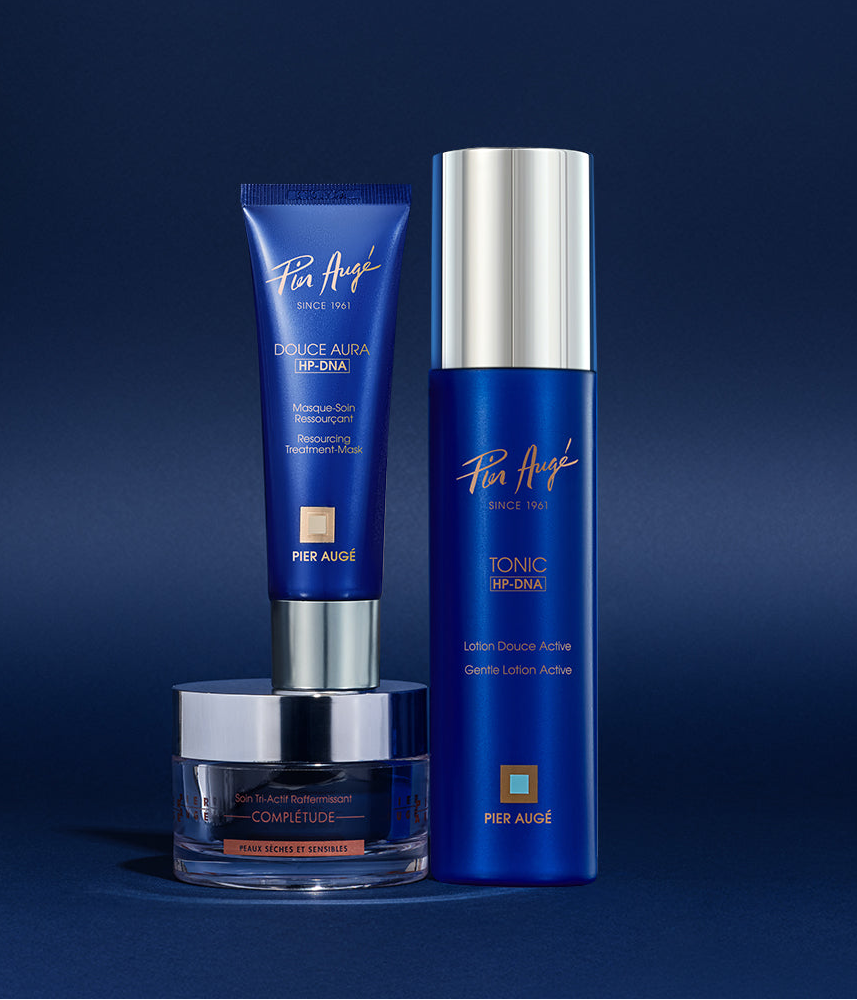
This is where brands like Pier Augé stand apart. Founded in 1961 by two pharmacists with deep clinical experience in wound repair, the French maison pioneered high-purity PDRN extraction for skincare applications as early as 1979 — decades before the current trend. Their extraction process refines PDRN to 99% purity with 98% bioaffinity to human DNA, preserving the long-chain structure necessary for effective cellular signaling. The brand’s Douce Aura Overnight Mask integrates this PDRN technology with supporting actives like niacinamide and peptides in a hydrogel-like, cream texture that transforms from opaque white to transparent as it absorbs — a visual cue that the formulation is delivering its payload. For those exploring pdrn salmon mask options and seeking a product backed by pharmaceutical heritage rather than trend-chasing, Pier Augé offers a reference point for what properly formulated PDRN skincare should look like.
FAQ
Is salmon PDRN safe for all skin types?
Yes, PDRN is remarkably well-tolerated across all skin types, including sensitive and reactive skin. Its anti-inflammatory properties — mediated through adenosine A2A receptor activation — actually make it beneficial for conditions like rosacea, post-procedure redness, and compromised barrier function. Because the purification process removes all salmon proteins, allergic reactions are extremely rare. Unlike retinol or exfoliating acids, PDRN does not irritate, purge, or thin the skin. It works supportively rather than aggressively.
How often should I use a salmon PDRN mask?
For maintenance and prevention, 2–3 times per week produces visible cumulative results. During intensive repair phases — after sun exposure, following in-office procedures, or addressing seasonal dehydration — daily use for one to two weeks can accelerate recovery. Because PDRN works through your skin’s natural repair pathways rather than forcing turnover, there is no risk of overuse or barrier damage with higher frequency.
Can I use a salmon PDRN mask with retinol?
Yes, and they actually complement each other well. Retinol accelerates cell turnover and collagen synthesis through RAR/RXR receptor pathways, but it can cause irritation and barrier disruption. PDRN, used on retinol "off" nights, repairs that barrier and provides nucleotide building blocks for the DNA repair that retinol-induced cell activity demands. Many dermatologists now recommend this alternating approach — retinol does the stimulating, PDRN does the repairing.
Does salmon DNA in skincare smell like fish?
No. Pharmaceutical-grade purification strips away all proteins, lipids, and volatile compounds responsible for fish odor. What remains is pure DNA suspended in an aqueous solution — odorless, colorless, and completely free of any marine scent. If you encounter a salmon PDRN product with a noticeable odor, that signals incomplete purification, and the product should be avoided.
How is a salmon pdrn face mask different from a salmon pdrn facial treatment?
A salmon pdrn face mask is a topical, at-home product that delivers PDRN through the stratum corneum via occlusion and humectant penetration. A salmon PDRN facial, typically performed in clinical settings, often uses microneedling or mesotherapy to deliver PDRN directly into the dermis. The in-office version achieves deeper penetration and faster results. However, topical masks applied consistently over weeks produce measurable improvements in dermal density and wrinkle reduction. The choice depends on your budget, tolerance for downtime, and how quickly you want results.
Can I use a salmon PDRN mask after microneedling at home?
This is one of the most effective ways to use a salmon dna pdrn mask. Microneedling creates microchannels that dramatically increase PDRN absorption into the dermis. Applying a PDRN hydrogel mask immediately after microneedling provides the dual benefit of enhanced penetration and the anti-inflammatory, wound-healing properties that reduce post-procedure redness and accelerate recovery. Ensure your mask is preservative-safe for post-procedure use — formulations free of alcohol, fragrance, and harsh preservatives are essential when the barrier is temporarily compromised.