

What Is a PDRN Mask? Benefits, Uses & How to Apply
14 Jun 2026
0 comments
Key Takeaways
-
A pdrn mask is a sheet or hydrogel mask infused with Polydeoxyribonucleotide, a DNA fragment derived primarily from salmon.
-
PDRN activates the adenosine A2A receptor, which triggers cellular repair, reduces inflammation, and stimulates collagen synthesis at the fibroblast level.
-
Unlike simple hydrating masks, PDRN supports the skin’s intrinsic ability to regenerate, offering cumulative improvements in firmness, texture, and barrier function.
-
Clinical evaluations demonstrate a statistically significant reduction in wrinkle depth and an increase in skin hydration after consistent use over 4 to 8 weeks.
-
Using a pdrn face mask 2–3 times per week, applied to clean skin for 15–30 minutes without rinsing, yields the most visible results.
1. What Is a PDRN Mask?
In the last few years, the pdrn mask has transitioned from a niche in-clinic treatment to a staple in at-home skincare regimens. You have almost certainly seen this acronym floating around, but the science behind it is far more compelling than the marketing buzz. Understanding what a pdrn mask actually does requires looking closely at the active ingredient and how it interacts with human biology.
1.1 The Science Behind PDRN (Polydeoxyribonucleotide)
PDRN stands for Polydeoxyribonucleotide. It is a DNA fraction extracted and purified from the milt of specific fish, most commonly Oncorhynchus mykiss (rainbow trout) or chum salmon. While the origin might sound foreign to skincare, the mechanism is highly compatible with human physiology. Salmon DNA possesses a nearly identical molecular structure to human DNA; this biomimicry allows it to bind to adenosine A2A receptors on our skin cells.
When a pdrn mask is applied, the active fragments do more than sit on the surface. PDRN activates the adenosine A2A receptor pathway, which is a well-documented biological cascade for stimulating tissue repair and angiogenesis (the formation of new blood vessels). Unlike hyaluronic acid, which primarily acts as a humectant to draw water into the skin, or retinol, which accelerates surface-level exfoliation, PDRN functions as a "biological instruction." This A2A receptor activation, extensively documented in pharmacological research, uniquely positions PDRN to reduce inflammation while concurrently prompting fibroblasts to synthesize new collagen and elastin.
It is important to note the distinction between delivery methods. While injectable PDRN has been a staple in wound care since the 1990s—approved by Italian drug authorities for healing chronic ulcers—a pdrn face mask delivers this ingredient topically. Advances in low-molecular-weight fragmentation now allow these nucleotides to penetrate the stratum corneum barrier in a topical format, making the mask a form of non-invasive regenerative upkeep.
1.2 How a PDRN Mask Delivers Active Ingredients
The efficacy of a pdrn facial mask is not solely about the ingredient; it is also about the vehicle. Most high-quality PDRN masks use hydrogels or bio-cellulose rather than standard cotton sheets. These materials adhere perfectly to the skin’s topography, creating an occlusive environment.
This occlusion is critical because it prevents the serum from evaporating and opens the paracellular pathways in the skin. In practical terms, a hydrogel PDRN mask forces the active DNA fragments to interact with the skin for an extended period, leading to deeper penetration and sustained release. Compared to a PDRN serum that you pat on and allow to air-dry, a mask treatment prevents evaporation, providing a sustained delivery system that maximizes the "repair window."
2. PDRN Mask Benefits for Your Skin
The shift toward using salmon DNA in cosmetics isn’t just a novelty. The documented pdrn mask benefits address the root causes of visible aging and skin stress rather than just concealing symptoms.
2.1 Boosts Collagen and Elastin Production
One of the most celebrated benefits of using a pdrn mask is its impact on the dermal matrix. As we age, fibroblast activity slows down, resulting in thinner skin, laxity, and the formation of fine lines. PDRN provides the raw nucleotide building blocks that fibroblasts use directly to repair DNA and synthesize new structural proteins.
A 2025 randomized, double-blind, split-face clinical trial quantified these anti-aging effects in the Journal of Cosmetics, Dermatological Sciences and Applications. After 28 days of treatment, participants using a PDRN-based cream showed an 8.67% increase in dermal density and an 18.42% reduction in under-eye bag volume. These changes were measurable using high-frequency ultrasound, confirming that topical application triggers biological remodeling in the deeper layers of the skin. When you use a pdrn face mask consistently over 8 to 12 weeks, this cumulative fibroblast stimulation translates into visibly firmer, more resilient skin.
2.2 Deep Hydration and Barrier Repair
A compromised skin barrier—often caused by over-exfoliation, harsh weather, or medical procedures—leads to elevated transepidermal water loss (TEWL). This results in tightness, flakiness, and a dull complexion. PDRN addresses this not by simply occluding the skin like petrolatum, but by supporting the synthesis of glycosaminoglycans and proteoglycans, the molecules responsible for binding water within the dermis.
The combination in a pdrn mask is particularly potent because formulators often pair PDRN with humectants like glycerin or hyaluronic acid. While the hyaluronic acid provides an immediate plumping effect, the PDRN works behind the scenes to strengthen the barrier architecture. One clinical evaluation noted a 45.86% surge in skin hydration and a 52.69% radiance boost just 15 minutes after a single mask treatment. This immediate quenching effect, combined with long-term barrier fortification, makes the mask ideal for post-procedure recovery after microneedling, laser, or chemical peels, where the skin is in a permeable state and starving for cellular energy.
2.3 Anti-Inflammatory and Skin-Soothing Effects
Inflammation is the precursor to almost every major skin concern, including premature aging (often called "inflammaging"), post-inflammatory hyperpigmentation, and persistent redness. Unlike aggressive actives such as pure ascorbic acid or strong retinoids, PDRN is inherently anti-inflammatory.
The adenosine A2A receptor pathway actively suppresses pro-inflammatory cytokines like TNF-α and IL-6. A 2025 narrative review on post-procedure recovery highlighted PDRN's utility precisely because it dampens the inflammatory cascade that leads to prolonged erythema after ablative treatments. For those with reactive, rosacea-prone, or stressed skin, using a pdrn facial mask can visibly neutralize redness within 20 to 30 minutes. It offers a regenerative route to calming the skin, making it safer for daily or pre-event rescue than even some botanically-derived soothing agents.
2.4 Improves Skin Texture and Radiance

Uneven texture—whether from accumulated dead skin cells, dehydration lines, or early scarring—responds well to the cell turnover signals PDRN provides. It clears away damaged DNA fragments from the cell surface and accelerates the natural regeneration cycle.
A large-scale 2025 review of 175 studies in MDPI Applied Sciences confirmed that PDRN consistently demonstrates anti-melanogenic, antioxidant, and texture-smoothing properties. Users typically report a "glass skin" luminosity after several sessions. This isn’t a superficial silicone blurring effect; it is the visual result of a smooth, tightly packed stratum corneum reflecting light evenly. Unlike an exfoliating charcoal mask, which physically or chemically removes debris, the PDRN mask addresses dullness by mending the skin from the inside out.
3. How to Use a PDRN Face Mask (Step-by-Step Guide)
To fully unlock the benefits, you must layer your products correctly and respect specific timing. The following is a professional how to use pdrn mask protocol.
3.1 Preparation: Cleanse and Tone
Always begin with a blank canvas. A proper double cleanse ensures that the PDRN fragments don’t have to compete with sebum, makeup residue, or SPF filters for absorption. After cleansing, the skin should be dry but never stripped.
Applying a hydrating toner or a lightweight essence immediately before the mask establishes a moisture gradient. This preliminary hydration step helps active ingredients penetrate deeper. Avoid using strong acid toners (AHAs/BHAs) right before a pdrn face mask; you want to minimize the risk of stinging and maximize the PDRN’s soothing repair signals.
3.2 Application: How Long to Leave a PDRN Mask On
Typical wear time for a hydrogel or sheet pdrn mask ranges from 15 to 30 minutes. However, because PDRN masks often feature thicker gel mediums, you can leave them on slightly longer than a paper-based collagen mask.
Smooth the mask onto the face starting from the center, pressing outward to eliminate air bubbles. The goal is full contact between the hydrogel and the skin. As the mask begins to feel dry or translucent—often around the 20-minute mark—the active essence has largely transferred to your skin. Remove the mask but do not rinse. The remaining essence on your face is a high-value serum that should be patted gently into the skin, not wiped away.
3.3 Post-Mask Routine: Lock in the Benefits
Once the serum has dried slightly to a tacky finish, you must seal it in.
-
Frequency: For compromised or dehydrated skin, a pdrn mask can be used daily for 5–7 days as an intensive reset. For maintenance, 2–3 times per week is sufficient.
-
Layering: After patting in the mask essence, apply a moisturizer or cream to occlude the active ingredients. Look for barrier-supportive ingredients like ceramides, peptides, and niacinamide. These work synergistically with PDRN.
-
Avoid: Do not follow this treatment with strong retinoids or high-percentage chemical exfoliants. Save those for an alternate evening to prevent overwhelming the skin’s cellular signaling pathways.
3.4 Best Time to Use a PDRN Mask
Evening application is optimal. The skin's natural repair mechanisms peak at night, and PDRN is essentially a repair activator. By applying the mask when the skin’s circadian rhythm is primed for regeneration, you are amplifying the biological response.
If you are recovering from a professional procedure like microneedling, wait until the pinpoint bleeding has stopped and the skin has re-epithelialized slightly—usually 24 to 48 hours post-treatment. PDRN is shown to accelerate the resolution of micro-wounds, but only when applied after the initial acute inflammatory stage has calmed.
4. PDRN Facial Mask vs Other Skincare Masks
To understand where a pdrn mask fits in your routine, it helps to distinguish it from other popular formats. While many masks temporarily make skin look better, PDRN works to change how skin functions.
4.1 PDRN Mask vs Hyaluronic Acid Mask
Hyaluronic acid (HA) masks are excellent water-binders. They draw moisture from the environment and drench the upper layers, creating an instant, albeit temporary, plumping effect. Once the mask is removed and the water evaporates, the visual impact can fade relatively quickly.
In contrast, a pdrn facial mask provides immediate hydration—often featuring HA in the blend—but follows this with a cellular directive to boost the skin’s own hyaluronic acid production. The results are cumulative. You aren’t just drinking water for your skin; you are repairing the plumbing system.
4.2 PDRN Mask vs Collagen Sheet Mask
Most collagen sheet masks contain hydrolyzed collagen molecules that are structurally too large to penetrate the dermis. They sit on the surface, acting as excellent humectants and film-formers but failing to integrate into the skin’s architecture.
PDRN masks take a different approach. Rather than depositing external collagen onto the face, the small DNA fragments penetrate the epidermis and signal fibroblasts to synthesize endogenous collagen. This is the difference between renting a temporary structure and building a permanent one.
4.3 PDRN Mask vs Retinol/Exfoliating Mask

Retinol and acid-based exfoliating masks work through controlled injury. They accelerate cell turnover by dissolving desmosomes or triggering a repair response, which often comes with a phase of peeling, redness, and sun sensitivity.
A pdrn face mask delivers regeneration without the destruction. It is non-photosensitizing and soothes rather than inflames. For individuals who cannot tolerate the dryness cycle of retinoids, or for those who need a reparative buffer between active treatments, PDRN is the superior choice. It provides anti-aging benefits by building up tissue rather than sloughing it away.
5. Who Should Use a PDRN Mask and What to Look For
PDRN is universally beneficial, but it is a game-changer for specific demographics and skin states.
5.1 Ideal Candidates for PDRN Masks
While anyone can benefit from the regenerative properties of salmon DNA, the following groups will see the most dramatic clinical improvement:
-
Post-Procedure Patients: Using a pdrn mask after laser, microneedling, or chemical peels accelerates re-epithelialization and drastically reduces downtime redness.
-
Mature Skin (35+): Women and men experiencing a loss of volume, elasticity, and "bounce" due to declining fibroblast activity.
-
Sensitive and Reactive Types: Those with rosacea or heat-induced redness will notice an immediate vasoconstrictive and anti-inflammatory effect.
-
The Chronically Dehydrated: Individuals who moisturize constantly but still have dull, flaky skin. PDRN helps fix the underlying water-binding mechanism.
5.2 What to Look for in a Quality PDRN Mask

Not all pdrn mask products are created equal. When selecting one, prioritize the following criteria:
-
High-Purity PDRN: Look for formulations that specify their source. The highest-quality PDRN, such as the high-purity DNA extracted from wild salmon, has a bioaffinity of 98% to human DNA. This ensures maximal receptor binding and cellular signaling efficiency.
-
Delivery Material: Choose hydrogel or bio-cellulose masks over standard cotton sheets. The gel matrix holds more actives and maintains the occlusive barrier necessary for deep penetration.
-
Synergistic Ingredients: Niacinamide, peptides (like Acetyl Hexapeptide-8), and ceramides amplify the PDRN’s repair signal. However, the formula should be free of sensitizing agents like artificial fragrance and denatured alcohol.
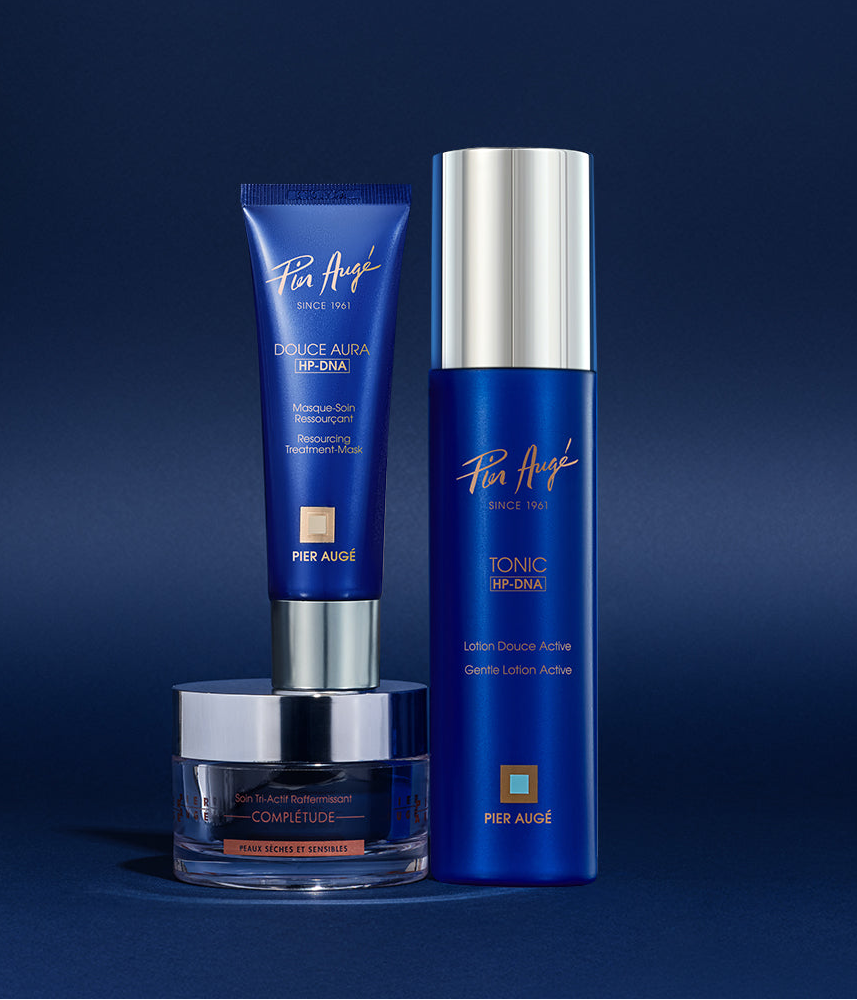
For those looking to integrate institute-grade repair into their nightly routine, products like the Pier Augé Douce Aura Overnight Mask represent the gold standard of this technology. As a pioneer of high-purity PDRN in skincare—having introduced it to cosmetics in 1979—the brand’s methodology is rooted in pharmaceutical repair rather than cosmetic masking. Their texture transitions from a rich cream to a crystalline veil, delivering a clinical 52.69% radiance boost and 20.69% wrinkle reduction over 14 days. It is a prime example of a product that performs as both a daily treatment and a weekly intensive pdrn facial mask, suitable even for post-laser skin recovery.
FAQ
What is a PDRN mask made of? A PDRN mask is made of a hydrogel or bio-cellulose sheet saturated with Polydeoxyribonucleotide (PDRN). PDRN is a DNA fraction purified from salmon milt, selected because its molecular structure is nearly identical to human DNA. The mask base acts as a delivery system, creating an occlusive seal to push the active DNA fragments into the skin.
Can I use a PDRN mask every day? Yes, PDRN masks are exceptionally gentle and anti-inflammatory, making them safe for daily use during periods of acute skin stress or barrier damage. However, for long-term maintenance and firming, 2–3 times per week is sufficient to sustain clinical results without over-saturating the receptor sites.
Is PDRN safe for sensitive skin? Absolutely. Unlike exfoliating agents or strong retinoids, PDRN actively suppresses inflammatory cytokines like TNF-α. It is widely recommended for reactive skin, including mild forms of rosacea. It is always prudent to perform a 24-hour patch test on the inner arm if you have a history of extreme allergies.
How long does it take to see results from PDRN masks? Immediate effects include a profound hydrating glow and noticeable reduction in redness, visible within 15–30 minutes of removal. Cumulative structural changes, such as collagen-induced firming and fine line smoothing, typically become measurable by the 4-week mark, with the most significant remodeling apparent after 8 to 12 weeks of consistent use.
Can I use a PDRN mask after microneedling? Yes, and it is highly recommended. PDRN was originally developed for wound healing. Applying a gentle, preservative-free PDRN mask 24 hours after microneedling can accelerate barrier recovery, reduce persistent redness, and support the formation of healthy new collagen in the micro-channels. Always confirm with your skincare provider, but it is a standard post-care protocol in many aesthetic clinics.