

Best PDRN Daily Mask? Hydrogel vs Sheet vs Cream Mask Compared
There's no single best PDRN mask — the right format depends on your skin type and how often you'll realistically use it. Hydrogel gives a cooling 30-to-60-minute reset, sheet masks deliver fast 15-minute hydration, and a cream mask is the most practical daily option because it wears for hours with no rinse-and-wait ritual. Here's how to match each format to your routine.
PDRN, Explained in Plain English — and What a Mask Realistically Can and Can't Do
PDRN (polydeoxyribonucleotide) is made from fragments of purified DNA, most often salmon-derived, with newer plant-based options appearing in formulas. It has a genuine evidence record in medical aesthetics, where it's delivered by injection. A leave-on cosmetic mask is a different route with different expectations — so it's worth being clear about that distinction.
What's defensible in a topical mask is surface-level calming, comfort, and hydration support, according to DermApproved's ingredient review. Collagen remodeling from a mask you apply at home? That's not something the current evidence supports.
PDRN has a stronger clinical record in medical aesthetics — a 2025 systematic review in the Journal of Cosmetic Dermatology summarized encouraging findings. But that work centers on injection, a completely different route from a leave-on mask.
Commercial purification makes allergic reactions unlikely, but if you have a fish or shellfish allergy, patch testing is a reasonable precaution before trying any PDRN product. For a deeper look at how this ingredient works in skincare, our PDRN mask guide walks through the basics.
Hydrogel vs Sheet vs Cream — How PDRN Mask Formats Really Compare
The format determines the experience more than the ingredient does. Here's how the three main options stack up:
Format |
Material & Texture |
Typical Wear Time |
Best For |
Practical Catch |
|---|---|---|---|---|
Hydrogel |
Cross-linked gel sheet |
30–60 min to overnight |
Cooling, pre-event reset |
Single-use cost adds up |
Sheet |
Cotton or bio-cellulose soaked in serum |
15–20 min |
Quick hydration on the go |
Can evaporate and drip |
Cream |
Leave-on formula |
Hours to overnight |
Daily or near-daily use |
Requires commitment to a jar |
One note on the "pink-to-clear" hydrogel trick you'll see in marketing: that color change is a formula-design cue that tells you the mask has dried, not proof that actives have been absorbed. It's a useful timer, not a scientific claim.
Hydrogel masks: a cooling reset, not a daily habit
Hydrogel masks feel luxurious. The cooling sensation is immediate, and your skin looks plump and dewy right after removal. The catch is that the effect is temporary — most people see it fade within hours. This format shines as a pre-event boost or a weekly self-care ritual, not as a daily staple.
Sheet masks: fast hydration with a short-lived payoff
Sheet masks are the most convenient entry point. You peel, apply, wait 15 minutes, and remove. The downside is evaporation: the serum sits on a thin fabric that dries out, and the payoff is subtle. They're great for travel or a quick morning refresh, but the results don't linger.
What about jelly and wrapping masks?
Jelly masks share the gel family's cooling feel and often come with the same caveat: the effect is short-lived and the per-use cost is higher than a cream jar. Wrapping (peel-off) masks add a removal ritual that some find satisfying and others find fiddly — the film can loosen overnight and needs a thicker application to peel cleanly. If you love the ritual, they're a fun weekly option; they're just not built for daily consistency.
Cream masks: the long-contact option that fits a nightly routine
A cream mask is the only format that makes daily use feel practical. You apply it like a moisturizer, leave it on for hours or overnight, and wake up without a peel-off ritual. The multi-use jar also means a lower cost per application than single-use sheets. For the best PDRN face mask for daily wear, this is the format to beat.

Which PDRN Mask Format Fits Your Skin Type and Routine?
Match the format to your skin, not to the prettiest packaging:
- Dry, dehydrated or barrier-focused skin: a cream mask gives the longest contact time and the most comfortable overnight wear.
- Oily or combination skin: a lightweight gel or a cream used 2–3 nights a week keeps things simple without heavy residue.
- Sensitive or reactive skin: patch test any format; a fragrance-free cream is usually the gentlest long-contact option.
- Travel or busy weeks: sheet masks are the most portable reset when a full routine isn't possible.
How Often Can You Realistically Use a PDRN Mask?
"Daily use" means different things for each format. Hydrogel masks are realistically a 1–2 times weekly habit — the cost and wear time make daily use impractical. Sheet masks can be used 2–3 times weekly, and daily use is sustainable only in short bursts. A cream mask is the only format where daily or near-daily use feels natural: no wait time, no rinse, no single-use cost.
If you're curious about building an overnight PDRN mask routine, that guide covers the nightly flow in more detail.
What Customers Notice When They Use a PDRN Cream Mask
Verified customer reviews of cream-format PDRN masks consistently mention the same things. The texture goes on rich but comfortable, absorbing through the night without a heavy residue on waking. There's no peeling, no dripping, and no waiting around — just application before bed. The next-morning feel is where the impressions converge: skin that looks soft, smooth, and calm. These are customer impressions, not clinical proof, but they're useful for setting expectations about the experience.

The Cream Option Worth Trying: Douce Aura Overnight Mask
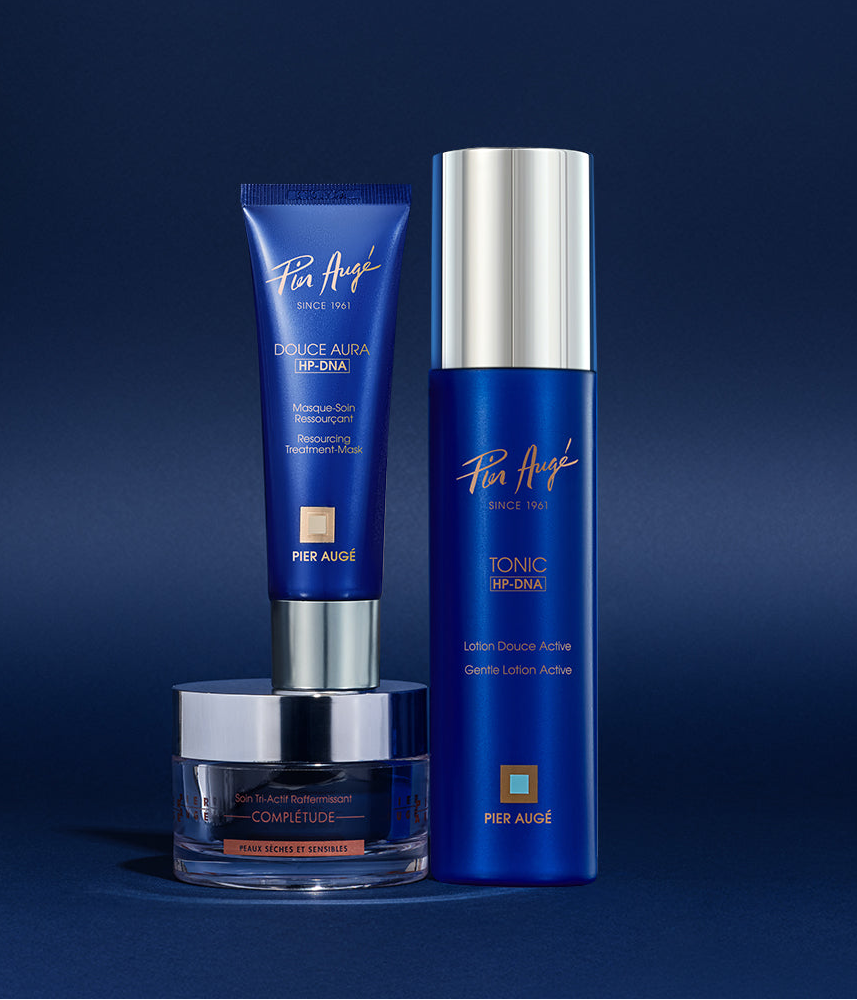
If the cream format sounds like the right fit, Douce Aura Overnight Mask is a strong place to start. It's a leave-on overnight cream mask in a 50 ml jar, designed for long-contact nightly wear. The formula includes Sodium DNA, commonly described in skincare as PDRN. The multi-use format makes it practical for consistent use, and the gentle positioning suits a nightly routine. View Douce Aura Overnight Mask
PDRN Mask FAQs
What's the best PDRN face mask for daily use?
For consistency, a cream format is the most practical daily choice — it wears for hours with no rinse-and-wait ritual. Hydrogel masks are better for occasional resets.
Hydrogel vs sheet vs cream — which is best for sensitive skin?
Hydrogel offers cooling, while a cream provides the gentlest long-contact wear. Either can work; patch test any PDRN product first, especially if you have a fish allergy.
Can I leave a PDRN mask on overnight?
Yes, if the format is designed for it. Cream masks and some hydrogel masks are formulated for overnight wear. Sheet masks are not — they dry out.
Can I use a PDRN mask every day?
It depends on the format. Hydrogel and sheet masks are typically 1–3 times weekly; a leave-on cream is the only format where daily or near-daily use feels natural. Watch your skin's response — if it feels tight or irritated, step back the frequency.
Does a PDRN mask turning transparent mean it's absorbed?
No. That color change is a formula-design cue that tells you the mask has dried. It's a useful timer, not proof of absorption.
How often can I use a PDRN mask without overdoing it?
Hydrogel: 1–2 times weekly. Sheet: 2–3 times weekly. Cream: daily or near-daily is realistic. Listen to your skin and adjust.
A Practical Note: Pair Any PDRN Mask with the Right Finish
Whatever format you choose, finish your routine the way your skin expects. After a rinse-off sheet or hydrogel mask, follow with a moisturizer to lock in the hydration. With a leave-on cream mask, the mask itself is the final step — just make sure your face is clean and your serums have absorbed first. Small routine habits like these matter more than any single product.
The Bottom Line — Pick the Format You'll Actually Keep Using
The best PDRN mask is the one that fits your skin type and your realistic schedule. Hydrogel for a cooling reset, sheet for quick hydration, cream for consistent daily wear. Keep expectations honest about what a topical can do, and you'll find a routine that actually sticks.