

The Origin of PDRN in Skincare: The Pier Augé Story
27 Jul 2026
0 comments
Key Takeaways
-
In the Pier Augé world, PDRN is not a late-arriving trend, but a core part of the brand’s long-standing repair philosophy.
-
The Augé couple’s view of skin repair began with their pharmaceutical training and years of hands-on experience caring for damaged skin in Africa.
-
According to brand materials, Pier Augé introduced HP-DNA (high-purity PDRN) into skincare in 1979, marking an important step in the brand’s repair story.
-
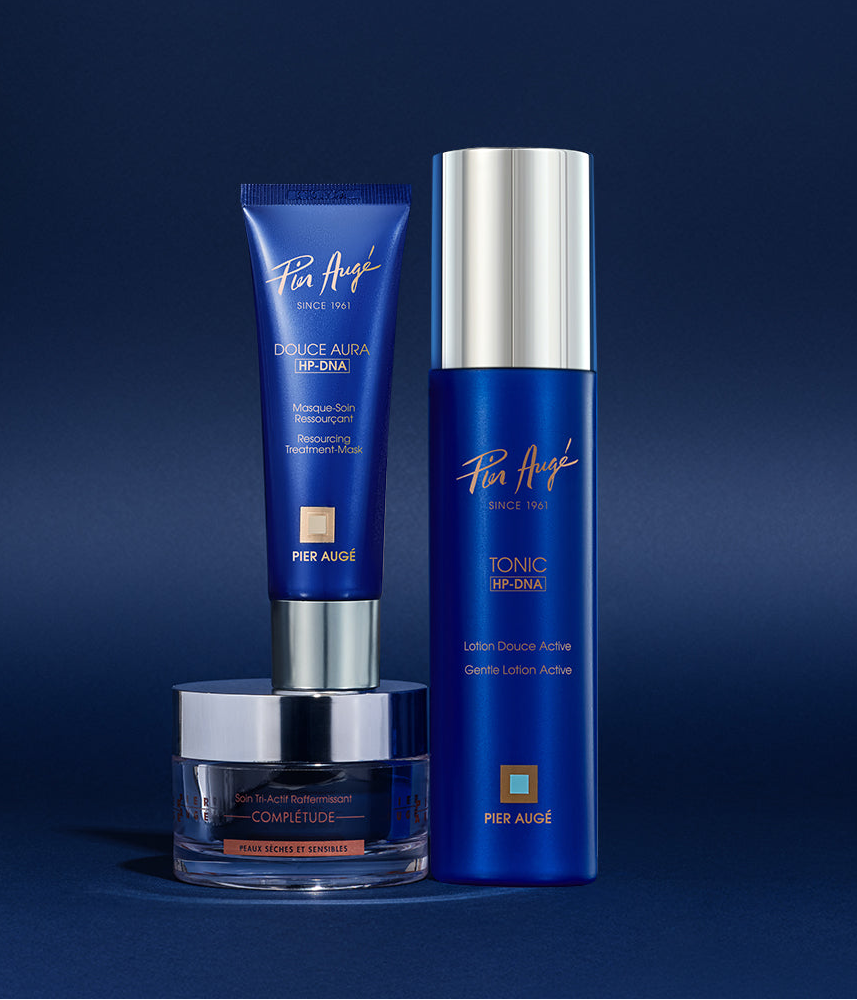
Today, that same philosophy continues through three different product expressions: TONIC, Douce Aura, and COMPLÉTUDE.
Introduction
Today, PDRN in skincare has become one of the most searched and discussed topics in repair-focused skincare. People are drawn to it because it is often associated with ideas like skin repair, comfort, recovery, and helping skin return to a more balanced state.
But if PDRN is treated only as a modern trending ingredient, it misses a more important question: why did it enter skincare in the first place, and how was it originally understood?
In the Pier Augé story, PDRN was never introduced as an isolated marketing concept. It became part of a much larger repair philosophy—one rooted in the Augé couple’s pharmaceutical background, shaped by real repair practice, and later expressed through the brand’s long-standing skincare principle: The Base Dergyl Method.
That is why, to understand what PDRN means at Pier Augé, it helps to start not with an ingredient list, but with the beginning of the brand story itself.

Before PDRN, Pier Augé Was Already Built Around Repair
The Augé couple were both trained pharmacists from the Faculty of Pharmacy at the University of Tours in France. In the years following World War II, they traveled to Djibouti in Africa, where they spent a decade providing medical aid. In a climate defined by heat, dryness, intense UV exposure, and skin damage, they worked closely with real cases involving burns, wounds, and environmentally stressed skin.
It was during this period that they developed the restorative balm later referred to as the “Augé ointment.”
After returning to France, that experience evolved into the BASE DERGYL Method. At the heart of this philosophy was a simple but ambitious belief: if skin has its own physiological structure and formula, then skincare should respect that structure and respond to what skin has truly lost.
In other words, even before PDRN entered the picture, Pier Augé was never just a cream brand. It was already a French salon repair brand built around repair, balance, and a diagnosis-led approach to skincare.
1979: A Turning Point in the Pier Augé PDRN Story
If repair philosophy is the root of Pier Augé, then 1979 is one of its defining milestones.
According to brand materials, Pier Augé introduced HP-DNA (high-purity PDRN) into skincare in 1979 and began integrating it into the brand’s broader product system. The brand sees this moment as a key step in opening a more advanced chapter of repair-focused skincare.
The defining characteristics of HP-DNA (high-purity PDRN) are described as follows:
-
derived from salmon DNA
-
99% purity
-
98% similarity to human DNA
Within the Pier Augé philosophy, PDRN was never treated as a sudden breakout ingredient. Instead, it became part of a deeper repair logic—one centered on helping skin recover from imbalance, reducing the visible effects of external stress, and supporting skin as it returns to a more stable condition.
Seen this way, PDRN did not simply add another active to the brand. It marked a deeper expression of the repair philosophy Pier Augé had already been building for years.

How Does Pier Augé Bring PDRN Into a Modern Skincare Routine?
In its modern product lineup, Pier Augé has not reduced PDRN to a single hero format. Instead, it extends the repair philosophy across different textures and routine moments. Three of the clearest examples are TONIC, Douce Aura, and COMPLÉTUDE.

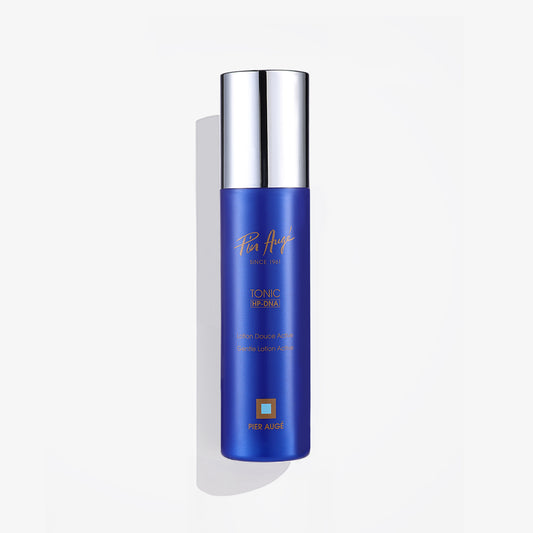
TONIC: Bringing Repair Into the First Daily Step
Pier Augé Lotion Douce Active TONIC belongs to the HP-DNA line and is positioned around three essential skincare benefits:
-
repair
-
soothing
-
hydration
If the Pier Augé philosophy is about helping skin return to balance, then TONIC represents its lightest and most everyday expression. It is the first step that helps skin feel hydrated, comforted, and more stable before the rest of the routine begins.
For users searching for PDRN toner, repair-focused lotion, or daily skincare for skin balance, TONIC reflects the idea that repair does not always have to begin with a heavy formula. Sometimes it starts with the step that helps skin settle first.
Douce Aura: Leaving Repair to the Night
Douce Aura is one of Pier Augé’s most iconic products. Introduced in 1999, it was created around the idea of repair and radiance.
Its role within the Pier Augé system is especially clear: it belongs to the overnight repair step.
If TONIC represents daily preparation, then Douce Aura represents the idea of letting repair continue through the night. This fits the brand’s identity well. Rather than leaning on harsh intensity or a “fast results at any cost” message, Pier Augé approaches skincare through a more continuous, salon-inspired way of helping skin feel comfortable, hydrated, and visibly restored by morning.
For that reason, Douce Aura naturally speaks to users looking for a repair-focused overnight mask, a PDRN night routine, or a more comfort-led approach to skin recovery.
COMPLÉTUDE: Richer, More Advanced Repair Support
COMPLÉTUDE extends the Pier Augé PDRN philosophy into a richer cream format.
Within the brand’s product matrix, COMPLÉTUDE can be understood as a more enveloping version of the same repair idea. It is designed for people who want not only comfort and stability, but also a skin feel that is fuller, smoother, and more supported.
If TONIC is the beginning and Douce Aura is the overnight repair step, then COMPLÉTUDE represents a more concentrated and more cushioned expression of repair.
For users interested in PDRN cream, rich repair skincare, or a more advanced repair moisturizer, COMPLÉTUDE shows how Pier Augé translates its philosophy into a cream designed for a more substantial skin-support experience.
Why This Story Still Matters Today
Many skincare brands now talk about PDRN. What makes the Pier Augé connection distinctive is that here, the philosophy came first.
PDRN was not added first and then given a story. Instead:
-
the repair mindset came from the Augé couple
-
the method came through the BASE DERGYL Method
-
the salon heritage came through schools and consultation-led treatments
-
and PDRN became a deeper expression of that already-established repair framework
That is what makes the Pier Augé PDRN story feel more complete. In this context, PDRN is not just a high-purity DNA-derived ingredient. It is part of the brand’s long-standing commitment to one core idea: repair should help skin return to balance.

Conclusion
If there is one sentence that best explains what PDRN means at Pier Augé, it is this:
PDRN is not a late-arriving trend in the brand story—it is a central extension of Pier Augé’s repair philosophy in modern skincare.
From the Augé couple’s early understanding of skin repair during their years of medical aid in Africa, to the development of the BASE DERGYL Method, and then to the introduction of HP-DNA (high-purity PDRN) into skincare in 1979, the Pier Augé story has always revolved around the same goal: helping skin return to its original balance.
Today, that story continues through different product expressions:
-
TONIC: the first step for daily hydration and soothing support
-
Douce Aura: the overnight step that allows repair to continue
-
COMPLÉTUDE: richer, more advanced support for skin in need of more
For anyone searching “What is PDRN in skincare?”, the Pier Augé answer is not just an ingredient explanation. It is a complete philosophy of repair:
PDRN matters most when it is part of a skincare system that truly respects skin balance.