

How Long to Keep Clay Mask On? Complete Guide by Skin Type
13 Jun 2026
0 comments
Key Takeaways
-
The standard recommendation for how long to keep clay mask on is 10–15 minutes, but exact timing depends on your skin type, clay formulation, and sensitivity.
-
Oily skin can tolerate 10–15 minutes, while dry or sensitive skin should limit the mask to 5–8 minutes to prevent barrier damage.
-
Never let the mask fully dry and crack—this signals over-drying, which can lead to dehydration, rebound oil production, and irritation.
-
Always prep the skin with a gentle cleanser and follow up with a deeply hydrating moisturizer or overnight mask to restore lost moisture.
How Long Should You Leave a Clay Mask On? The General Rule
If you’ve ever felt your face tighten and crack under a dried clay mask, you’ve experienced the most common mistake in at-home masking. Knowing how long to leave a clay mask on is the difference between a deep, satisfying cleanse and a dehydrated, irritated complexion. The general rule, supported by dermatology guidelines, is to leave a clay mask on for 5 to 15 minutes—but the “sweet spot” is highly individual.
The 10-15 Minute Standard
For most people with normal to combination skin, the ideal window to benefit from a clay mask’s purifying properties without side effects is 10 to 15 minutes. This timing allows the clay to absorb excess sebum and draw out pore-clogging impurities while the mask begins to set. A slight tightening sensation is normal; however, the mask should still feel slightly cool and tactile to the touch, not bone-dry. According to dermatology guidelines, 10–15 minutes is the duration that optimally cleanses without stripping the skin's natural moisture barrier.
Why Timing Matters
Clay masks work through adsorption—the negatively charged clay particles attract positively charged debris like oil, dead skin cells, and environmental pollutants. As the water in the mask evaporates, the clay pulls these impurities out of the pores. But evaporation doesn't stop at the surface. Once the mask dries beyond a certain point, it begins to pull water from the skin itself. This can compromise the stratum corneum, triggering an immediate tightness that many people mistake for a deep clean. In reality, it's a signal that the mask has gone too far.
Signs It's Time to Rinse
You don’t need a timer; your skin will tell you when how long you should leave a clay mask on has been exceeded. Watch for these cues:
-
The mask has turned from a dark, wet paste to a light, matte finish and is beginning to crack around the edges.
-
You feel a persistent, uncomfortable pulling sensation rather than a mild firmness.
-
Your cheeks or chin start to itch.
-
The mask feels hot or you see redness peeking through.
As a rule of thumb, when the mask is about 80% dry—still slightly elastic and not fully matte—it’s the perfect moment to rinse. This approach ensures you get the deep pore-clearing action without the dehydrating aftermath.
Clay Mask Timing by Skin Type
No two skin types respond to clay the same way. The oil-absorbing power that works wonders for a shiny T-zone can wreak havoc on your dry cheeks. Below are precise, evidence-based guidelines for how long to leave clay mask on face based on your skin type.
|
Skin Type
|
Recommended Mask Time
|
Additional Notes
|
|---|---|---|
|
Oily
|
10–15 minutes
|
Can push toward 15 min but never let mask fully crack. Bentonite clay most effective.
|
|
Dry
|
5–7 minutes
|
Remove while mask is still noticeably damp; use kaolin clay for gentleness.
|
|
Sensitive
|
5–8 minutes
|
Start at 5 minutes, gradually increase only if tolerance allows. Avoid highly absorbent clays.
|
|
Combination
|
8–12 minutes (T‑zone only)
|
Apply only to forehead, nose, and chin; use a hydrating mask on cheeks if needed.
|

Oily Skin: 10-15 Minutes
If your skin produces excess sebum and you battle shine by midday, a clay mask is your best friend—provided you don’t overdo it. Oily skin can handle the full 10–15 minute window, allowing bentonite or French green clay enough time to draw out deep-seated oil and temporarily minimize the appearance of pores. Still, resist the urge to let the mask crack. Over-drying the skin can paradoxically trigger more oil production—a phenomenon known as reactive seborrhea, confirmed in a 2023 clinical trial published in Skin Research and Technology, which found that clay masks significantly reduce sebum and improve skin texture when used correctly, but overuse can compromise the barrier.
Dry Skin: 5-7 Minutes
For dry or dehydrated skin, how long to leave a clay mask on is dramatically shorter. The goal isn’t heavy oil absorption—it’s gentle purification. A mask left on for only 5–7 minutes, ideally one formulated with kaolin clay (the mildest option), will lift light impurities without stripping away the precious lipids your skin needs. Remove the mask while it’s still slightly moist and pliable. Follow immediately with a rich moisturizer or a reparative product like the Pier Augé Douce Aura Overnight Mask to lock in hydration and support barrier recovery.
Sensitive Skin: 5-8 Minutes
Sensitive skin requires the most cautious approach. Start with 5 minutes and never exceed 8 minutes unless you've patch-tested and built tolerance. Avoid bentonite clay, which is highly absorbent, and opt for clay masks that contain soothing agents like bisabolol or colloidal oatmeal. According to the American Academy of Dermatology, sensitive skin types should avoid masks with fragrance, essential oils, or physical exfoliants entirely—aim for a "half-dry" state (when the mask is just beginning to lose its sheen) and remove it immediately if any stinging or redness occurs.
Combination Skin: 8-12 Minutes (T-Zone Only)
Combination skin can benefit from a split approach. Apply a medium-absorbency clay mask only to your T‑zone (forehead, nose, chin) for 8–12 minutes, avoiding the drier cheek areas entirely. If you prefer an all-over feel, pair a clay mask on the T‑zone with a hydrating gel mask on the cheeks. This “multi-masking” technique respects the varied needs of your face and prevents the over-drying that triggers breakouts on the outer contours.
What Happens If You Leave a Clay Mask On Too Long?
Ignoring the rules for how long to keep clay mask on doesn’t just make your skin feel tight—it can trigger a cascade of negative effects that undermine your glow goals.
Dehydration and Barrier Damage
When a clay mask fully dries and cracks, it has surpassed its ability to absorb only surface oil. It now pulls water from the deeper layers of the epidermis. This transepidermal water loss weakens the skin’s protective lipid barrier, leaving it vulnerable to irritants and bacteria. Clinically, you might notice flaking, scaling, and a papery texture that takes days to calm. The American Academy of Dermatology explicitly warns that overusing clay masks or leaving them on too long can dry out your skin and lead to irritation.
Rebound Oil Production
Your skin is programmed to maintain homeostasis. Stripping it of oil sends a distress signal to the sebaceous glands: produce more. This compensatory mechanism, known clinically as reactive seborrhea, explains why some people experience an oilier complexion or fresh breakouts after overly zealous masking. As the 2023 Skin Research and Technology clinical trial confirmed, clay mask treatments must be carefully timed—the same twice-weekly protocol that reduced acne lesions and improved skin texture also demonstrated that overuse can trigger barrier impairment. In short, leaving a clay mask on too long can create the very problem you were trying to solve.
Irritation and Redness
Beyond dehydration, the physical tightening of clay as it contracts can stress the skin’s microvasculature. Sensitive skin may develop visible redness, broken capillaries, or a stinging sensation that lingers. If you have active inflammatory acne, like pustules or cysts, the tension and dryness can exacerbate inflammation and even push trapped bacteria deeper. The key takeaway: how long do you leave a clay mask on should always be conservative; never let the mask pull your skin into discomfort.
Best Practices for Clay Mask Application
Getting the timing right is half the battle. The other half lies in how you prepare, apply, and care for your skin around the mask. These best practices ensure you maximize benefits while eliminating the risk of irritation.
Pre-Mask Prep
Always start with a clean canvas. Use a gentle, sulfate-free cleanser to remove makeup, sunscreen, and surface grime. The Pier Augé Cleansing Cream SAVON, with its cream-to-foam formula and Arctic Cloudberry, respects the skin’s microbiome without stripping—a critical step before a drying treatment. Some dermatologists also recommend a light physical or chemical exfoliation 1–2 days prior to help clay penetrate more effectively, but never exfoliate immediately before masking if your skin is sensitive.
Application Technique
Use a flat foundation brush or clean fingers to apply an even, thin-to-medium layer over the face, avoiding the delicate eye and lip areas. Thicker layers don’t increase efficacy; they just take longer to dry and can cause uneven setting. If you’re multi-masking, apply the clay only where needed and a hydrating product elsewhere. Set a timer for the lower end of your skin type’s recommended range, and check the mask’s condition visually and physically. This hands-on approach answers the eternal question: how long should I leave a clay mask on in real time.
Post-Mask Recovery
Removing the mask is as important as the wait time. Use lukewarm water—never hot—and a soft, damp cloth to gently dissolve and wipe away the clay. Avoid scrubbing, as your skin is in a temporarily more permeable state. Immediately after patting dry, layer on a deeply hydrating toner or serum, followed by a barrier-repairing moisturizer.
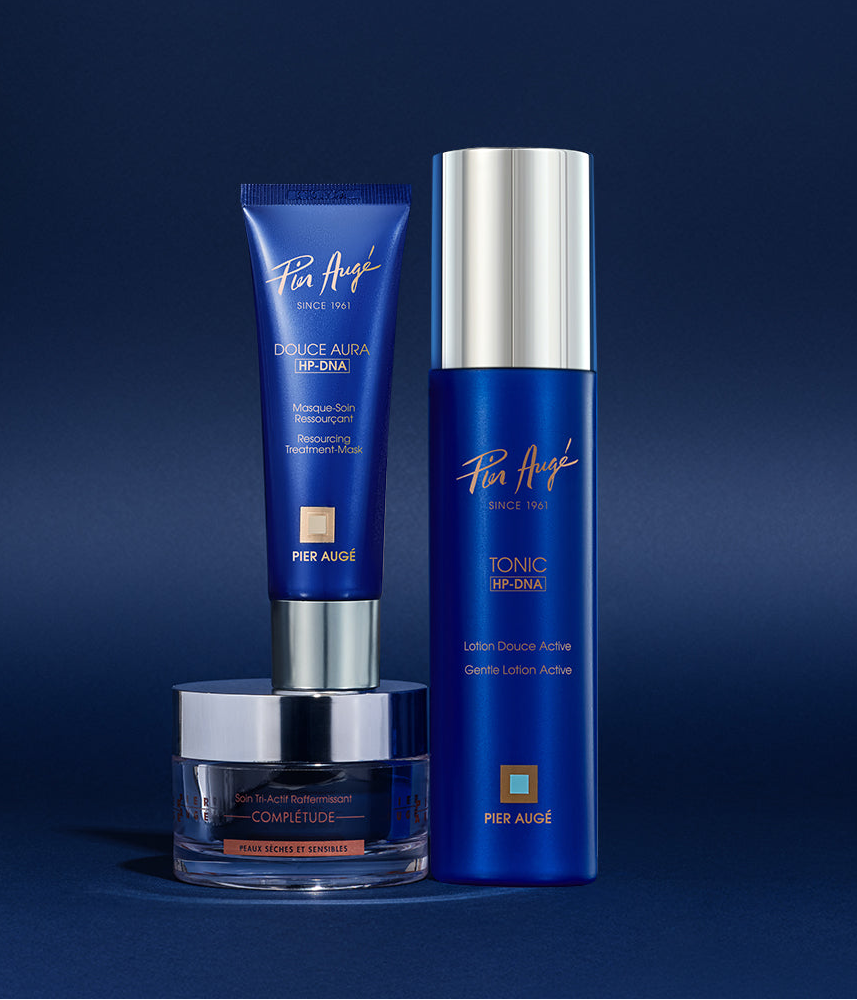
This is where the concept of "repair" takes center stage. Drawing on its pharmaceutical heritage, Pier Augé's Douce Aura Overnight Mask is an exceptional post-clay treatment. Infused with high-purity PDRN that is 98% similar to human DNA, this mask delivers a institution-grade hydration surge and reinforces the barrier that clay masks can temporarily disrupt. In a 14-day study, it increased skin plumping by 14.82% and reduced wrinkle depth by 20.69%—making it the ideal recovery companion for any deep-cleansing routine. Follow with a moisturizer like the brand's Firming Tri-Active Cream to seal in all the reparative actives.
Clay Mask vs. Other Mask Types: Timing Comparison
Understanding how long to leave a clay mask on becomes clearer when you contrast it with other popular mask formats. Each type operates on a different mechanism and demands a distinct approach to timing.
Clay Mask vs. Charcoal Mask
Charcoal masks, like clay, function through adsorption, pulling out impurities with their porous surface. However, charcoal masks often come in peel-off formats, drying to a rubbery film. The timing recommendation for a charcoal mask that is meant to peel is tricky: remove too early and you miss the unifying grip; too late and you risk pain and redness. Traditional charcoal clay masks typically follow a similar 10–15 minute window as clay, but because charcoal can be less absorbent than bentonite, some formulations tolerate slightly longer wear. Still, the same rule applies—never let it fully dry and crack.
Clay Mask vs. Sheet Mask
Sheet masks present the opposite end of the spectrum. They rely on occlusion, not adsorption, to infuse the skin with hydrating serums. A sheet mask is designed to be left on for 15–25 minutes—and you can even extend that time until the sheet begins to dry out, as it won’t pull moisture from the skin like clay. This makes sheet masks a perfect pairing with clay masks in a weekly routine: use clay to detoxify, then follow immediately with a sheet mask or overnight mask to replenish hydration.
Clay Mask vs. Gel Mask
Gel masks, often water-based and alcohol-free, are cooling and meant to soothe. They can be left on for 20–30 minutes without risk, and some can be used as overnight sleeping masks. Unlike clay, gel masks don’t tighten or dry; they gradually absorb or evaporate. The comparison highlights why how long should I leave clay mask on demands stricter attention—no other mask type carries the same risk of barrier damage if over-extended.
Frequently Asked Questions
Can I leave a clay mask on overnight?
No. Leaving a clay mask on overnight is a recipe for severe dehydration, irritation, and potential rebound oil production. As the mask fully dries, it will suck moisture from your skin, disrupt your barrier, and can even lead to broken capillaries. Always remove clay masks within the recommended 5–15 minute window.
How often should I use a clay mask?
For oily skin, 2–3 times per week is generally safe. Combination skin can handle 1–2 times per week, ideally targeting only the T‑zone. Dry and sensitive skin should limit use to once per week or every other week, depending on tolerance. Consistent overuse can compromise the barrier and trigger more oil production or sensitivity, as the 2023 clinical study in Skin Research and Technology demonstrated—the same biweekly protocol that improved acne outcomes also showed that over-application can backfire.
Should a clay mask dry completely before rinsing?
No. The mask should be roughly 80% dry—matte but still slightly elastic, with no visible cracks. Allowing it to dry completely means it has started to pull water from your skin, not just surface impurities. Rinse when the mask lightens in color and feels taut, not rigid.
Why does my skin feel tight after a clay mask?
A mild tightening is normal as the clay contracts and lifts impurities. However, if the tightness feels uncomfortable or persists after rinsing, it indicates the mask was left on too long or was too absorbent for your skin type. Immediately apply a hydrating toner and a rich moisturizer to restore comfort.
Can I use a clay mask every day?
Daily use is excessively stripping, even for oily skin. It disrupts the natural oil balance and can lead to chronic barrier impairment. Stick to a maximum of every other day for very oily skin, and never beyond that. Most skin types thrive on twice-weekly use.
What should I apply after a clay mask?
After gently removing the mask, apply a hydrating toner, followed by a reparative product such as Pier Augé's PDRN mask technology to deeply replenish moisture and support the barrier. Seal with a nourishing moisturizer to lock in hydration and prevent post-mask tightness.
Conclusion
Mastering how long to keep clay mask on is the secret to clear, balanced skin without the sting of over-drying. The 10–15 minute guideline is a starting line, not a finish line. Fine-tune it to your unique skin type, watch for the 80% dry signal, and always follow with a heavy dose of hydration. When done right, a clay mask is a once- or twice-weekly ritual that keeps pores clear, oil in check, and your complexion looking fresh. When done wrong, it becomes a fast track to irritation and rebound breakouts.
Ready to elevate your masking ritual? Pair your clay mask session with a pharmaceutical-grade recovery product designed to repair and restore. The Pier Augé Douce Aura Overnight Mask is a clinically proven PDRN-powered treatment that turns post-mask tightness into a dewy, resilient glow by morning. Your skin deserves the same level of care after a deep cleanse that it gets during one.