

What Is Salmon PDRN? The Science Behind Salmon DNA Skincare
Salmon PDRN — short for polydeoxyribonucleotide — is a purified, DNA-derived ingredient sourced from salmon that's showing up in serums, creams, and masks. It's not raw fish on your face; it's cleaned, sterilized nucleotide fragments. The clinical buzz around PDRN comes mostly from injectable treatments, so topical products offer a gentler, surface-level experience. Here's what you need to know before you buy.
What Is Salmon PDRN? The Ingredient, Explained
PDRN stands for polydeoxyribonucleotide. In plain terms, it's a chain of DNA fragments that have been extracted and purified for use in skincare. The source is salmon reproductive tissue, but by the time it reaches a formula, it's been processed to remove proteins, cells, and other biological material.
What's left is a biopolymer that skincare formulators value for its calming and hydrating potential. On an ingredient list, you'll see it under names like "Polydeoxyribonucleotide" or "Sodium DNA." For a wider look at PDRN mask options, browse our PDRN mask collection. The everyday term "salmon DNA" is just the colloquial shorthand for the same ingredient.
The reason salmon is the preferred source comes down to purity. According to DermApproved's ingredient profile, salmon testes yield highly purified DNA with low levels of proteins and contaminants compared to other sources. That makes it a practical choice for cosmetic manufacturing — not a gimmick, but also not a miracle ingredient.
If you want the full breakdown of how PDRN works in mask formats specifically, our guide to PDRN masks covers the broader category.

Where Does Salmon PDRN Come From? A Very Short Origin Story
The story starts in Italy in the 1990s, where PDRN was developed as a prescription wound-healing drug. It then moved to South Korea, where it became famous as the active ingredient in injectable aesthetic treatments. Now it's made its way into topical skincare — serums, creams, and masks — sold around the world.
Why salmon specifically? As noted above, salmon-derived DNA has a favorable purity profile. It's rich in nucleotides and low in the proteins that could trigger unwanted reactions. That's the whole origin story in a nutshell: a medical compound with a solid clinical record, repackaged for at-home use.
Salmon PDRN vs Salmon DNA — Are They the Same Thing?
Mostly, yes — but with a caveat. "Salmon DNA" is the everyday name consumers recognize. PDRN is the more precise term for the purified nucleotide form used in cosmetic formulations. Brands often use the two interchangeably, but not every product labeled "salmon DNA" delivers the same quality.
Here's what to scan for on an ingredient list, based on labeling guidance from DermApproved:
- **Polydeoxyribonucleotide** — the full INCI name
- **Sodium DNA** — a common salt form
- **Oncorhynchus keta (salmon) sperm DNA** — species-specific listing
- **Paeonia lactiflora callus extract** — a plant-derived alternative
The molecular weight matters too. Lower-molecular-weight fractions are generally considered more favorable for topical use, which is why you'll see "low-MW" called out on newer products.
How Salmon PDRN Is Used — Injectable vs Topical
This is where expectations need a reset. The impressive clinical results you've heard about — wrinkle reduction, collagen remodeling — come from injectable PDRN delivered directly into the dermis. That's a completely different situation than applying a cream to intact skin.
The barrier problem is real. PDRN molecules are large — roughly 50 to 1,500 kDa, with most fractions around 80 to 200 kDa. For context, the conventional cutoff for passive skin absorption is around 500 Da. That's a size difference of several orders of magnitude.
So what can a topical realistically do? Surface-level work: calming inflammatory signaling, supporting hydration, and reinforcing the skin barrier. These effects happen in the outermost layers of the skin, where the molecule can interact without needing deep penetration.
PDRN has genuine research attention in medical aesthetics — a review in the Journal of Cosmetic Dermatology notes encouraging evidence for polynucleotide biorevitalization. But that evidence centers on injectable delivery, not leave-on products. A topical is a maintenance and support layer, not a needle-free substitute for in-clinic treatment.
What You Can Honestly Expect from a Topical
Let's be direct: the "does it work?" answer depends entirely on the format.
**Injectable PDRN:** The evidence is solid. Clinical studies show meaningful improvements in skin roughness and periorbital wrinkles when PDRN is injected into the dermis. These are real results from direct delivery to the target tissue.
**Topical PDRN:** The evidence is developing. There's research momentum, particularly around newer low-molecular-weight and plant-derived versions, but the finished-product data is still limited. What's most defensible for a leave-on product is surface-level calming, hydration, and barrier support.
**What a topical cannot promise:** Deep collagen remodeling, injection-level wrinkle change, or replication of clinical results. No finished topical product has been proven to match what a needle can deliver.
The honest takeaway, per DermApproved's evidence assessment, is that topical PDRN is a reasonable ingredient to have in rotation — especially for sensitive or barrier-compromised skin — but it's not a shortcut to injectable-level results.
A Note on Sourcing and Allergies
Because PDRN is commonly derived from salmon tissue, anyone with a fish or shellfish allergy should patch test any product containing it before full-face use. Purification removes most proteins, which is why reactions are uncommon — but "uncommon" isn't "impossible," and a patch test is a ten-second habit worth keeping.

How to Spot Salmon PDRN on a Product Label
You don't need a chemistry degree to judge a PDRN product. Here's a quick checklist:
Look for the right INCI names. "Polydeoxyribonucleotide" and "Sodium DNA" are your signals. If you see "Oncorhynchus keta (salmon) sperm DNA," that's the same ingredient spelled out in full.
Check the concentration. Most topical formulations target roughly 0.5% to 1% PDRN. Industry guidance suggests anything below 0.3% is unlikely to be biologically meaningful — at that level, it's more of a marketing line item than a working active.
Watch for "low-MW." Lower-molecular-weight fractions have better theoretical penetration than the older injectable-grade material. It's a marker worth noting on a label.
Consider your allergies. If you have a documented fish or shellfish allergy, approach salmon-derived PDRN with caution. Purification removes proteins thoroughly, making a true allergic reaction unlikely, but it's not irrational to be wary. Plant-derived versions from peony or ginseng exist if you'd rather avoid the question entirely.
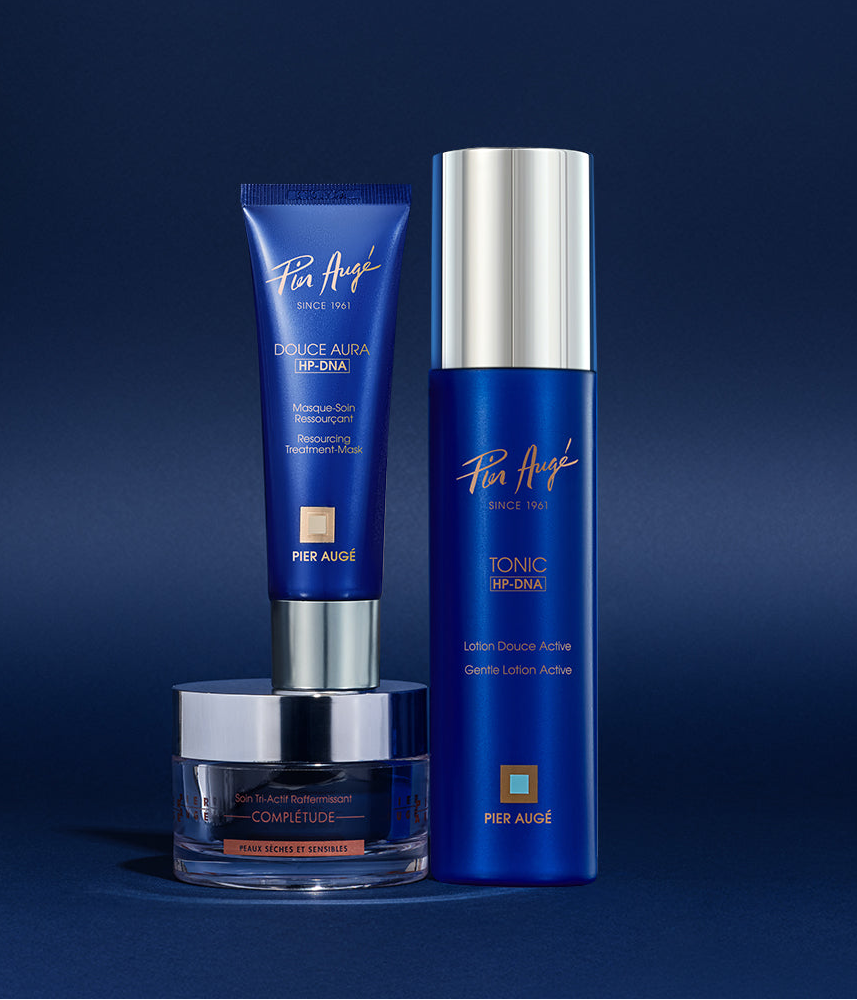
Where You See It: Salmon PDRN in the Douce Aura Overnight Mask
If you're curious how salmon PDRN appears in a real finished product, the Douce Aura Overnight Mask is a good example. It's a leave-on overnight cream mask in a 50 ml format, designed to be applied before bed and left on while you sleep. The formula includes Sodium DNA, commonly described in skincare as PDRN, as part of a blend focused on hydration and barrier comfort.
It's an at-home, maintenance-style product — not a clinical treatment. If that sounds like the kind of gentle overnight option you'd like to try, you can view the full details here.
Salmon PDRN FAQ
Is salmon PDRN actually salmon sperm?
Technically, the source is salmon reproductive tissue, but what ends up in your skincare is purified, sterilized nucleotide fragments. The proteins and cellular material that would make it recognizable as "sperm" are processed out. You're getting DNA building blocks, not biological debris.
Does topical PDRN work as well as PDRN injections?
No. Injectable PDRN is delivered directly into the dermis, bypassing the skin barrier entirely. Topical PDRN molecules are too large for significant passive absorption, so the depth and magnitude of action are categorically different. A topical can support surface-level calming and hydration; it cannot replicate injection-level collagen remodeling.
Is salmon PDRN safe for sensitive or fish-allergic skin?
For sensitive skin, PDRN is generally considered gentle — its anti-inflammatory profile is one of its strengths. For fish or shellfish allergies, proceed with caution. Proper purification removes proteins thoroughly, making a true allergic reaction unlikely, but patch testing is wise. Plant-derived PDRN from peony or ginseng is an alternative.
Can I use salmon PDRN with retinol or other actives?
Yes, no interference is expected. In fact, PDRN's anti-inflammatory leanings may help buffer some early retinol irritation. Many K-beauty formulas pair the two on purpose. Apply them in sequence rather than mixing them in one bottle, especially if your skin runs sensitive.
How long before a topical PDRN product shows results?
For surface-level effects like reduced redness, smoother texture, and better hydration, some people notice a difference within a few weeks of consistent use. For anything more dramatic, you'd need to look at clinical treatments — no topical is going to deliver injection-level changes on any timeline.