

What Do Clay Mask Do? Purification, Oil Control, and Why Post-Clay Barrier Repair Matters
29 May 2026
0 comments
Clay masks are one of the oldest skincare tools in existence. Ancient civilizations used mineral-rich earth for healing and cosmetic purposes long before anyone understood the science behind it. Today, clay masks remain a staple in dermatology offices and bathroom cabinets alike — not because of tradition, but because the chemistry actually works.
But what do clay masks actually do, and what happens to your skin after the mask comes off? The purification is real, but so is the aftermath. Understanding both sides of the clay mask equation is the difference between better skin and a compromised barrier.
How Clay Masks Work: Adsorption, Not Absorption
The word that matters here is adsorption, not absorption. Absorption is when one substance soaks into another, like a sponge taking up water. Adsorption is when molecules stick to a surface. Clay particles have an enormous surface area relative to their size — a single gram of bentonite clay can have a surface area of several hundred square meters — and they carry a negative electrical charge.
Positively charged particles — including excess sebum, environmental pollutants, heavy metal residues, and some bacteria — are electrostatically attracted to the negatively charged clay surface. They bind to it. When you rinse the clay off, those impurities go down the drain with it.
This mechanism has been documented in clinical research. A 2023 study by Zhang et al., published in Skin Research and Technology, evaluated a clay mask containing kaolin and bentonite on 75 adults with oily or combination skin over 4 weeks of twice-weekly use. The results: open comedones (blackheads) reduced by 65.77%, closed comedones by 46.44%, sebum content dropped by 29.90%, and skin hydration actually increased by 29.65% — likely attributable to the panthenol (vitamin B5) and cellulobeads in the formulation (Zhang et al., Skin Res Technol, 2023). Transepidermal water loss (TEWL) also decreased by 20.41%, indicating improved barrier function.
Crucially, these improvements were statistically significant from the immediate post-treatment period and sustained over the 4-week study. The researchers attributed the results to "the ability of kaolin and bentonite to absorb oil due to their large surface area, porosity, and ionic charge."
A 2024 review by Zafar et al. in Archives of Dermatological Research further confirmed that bentonites and montmorillonites demonstrate anti-inflammatory, wound-healing, oil-absorbing, photoprotective, and anti-aging effects across in vitro, animal, and preliminary clinical studies — while noting that larger-scale randomized clinical trials are still needed (Zafar et al., Arch Dermatol Res, 2024).
Different Clays for Different Skin Types
Not all clays are the same. The mineral composition, particle size, and cation exchange capacity vary significantly between types, and those differences affect how a clay mask behaves on your skin.
- Bentonite clay forms from volcanic ash and has the strongest drawing power. Its high cation exchange capacity makes it particularly effective at adsorbing sebum and impurities, but it can be drying for skin types that are already dehydrated. It swells when mixed with water, forming a paste that tightens as it dries. This tightening sensation can feel satisfying but is not an indicator of efficacy — it is simply the clay dehydrating.
- Kaolin clay is milder, with a finer texture and less aggressive oil-absorbing capacity. It is better suited for sensitive or combination skin that needs a gentler touch. Kaolin is actually FDA-recognized as a skin protectant active ingredient (at concentrations from 4% to 20%) and is classified as GRAS (Generally Recognized As Safe) as an indirect food additive, giving some indication of its safety profile at a regulatory level.
- French green clay (illite) sits somewhere in between, with a mineral profile that includes decomposed plant matter giving it the green color. It offers moderate oil absorption with additional mineral content.
The key is matching the clay to the skin concern. Oily, acne-prone skin benefits from bentonite's stronger adsorption. Sensitive or combination skin does better with kaolin. And regardless of clay type, the mask should come off before it fully dries and cracks — a fully dried clay mask has stopped working and started pulling moisture out of the skin instead of impurities.

The Aftermath: What Happens When Clay Comes Off
Clay masks do their job by removing things from the skin. Oil goes. Impurities go. But the skin's protective barrier — part of what gets stripped — also needs attention afterward.
This is the part most routines skip. A clay mask pulls sebum from the surface, and suddenly the skin's natural moisture regulation is disrupted. Sebum serves a function: it is part of the acid mantle, the thin film that keeps bacteria out and moisture in. Remove too much too aggressively, and the skin can respond with a compensatory overproduction of oil, leaving you oilier 24 hours later than you were before the mask.
The solution is not to avoid clay masks — they are genuinely effective tools. The solution is to follow them with barrier repair.
After the Clay: Pier Augé's Barrier Repair Philosophy
This is where the connection between purification and repair becomes concrete. Pier Augé, a French skincare founded in 1961 by two pharmacists, built its entire identity around the concept of skin repair. The founders' experience providing medical care in Africa — where they spent more than a decade treating severe skin damage and developed a repairing balm tested on thousands of clinical cases — shaped the conviction that "true skincare begins with repair and the restoration of the skin's original balance."
The brand's approach is fundamentally different from the "more is better" logic that sometimes drives clay mask routines. Instead of stripping the skin further with harsh actives, Pier Augé formulas work to restore what has been lost — lipids, hydration, and cellular repair signals. This hydrating overnight repair approach is central to their product philosophy.
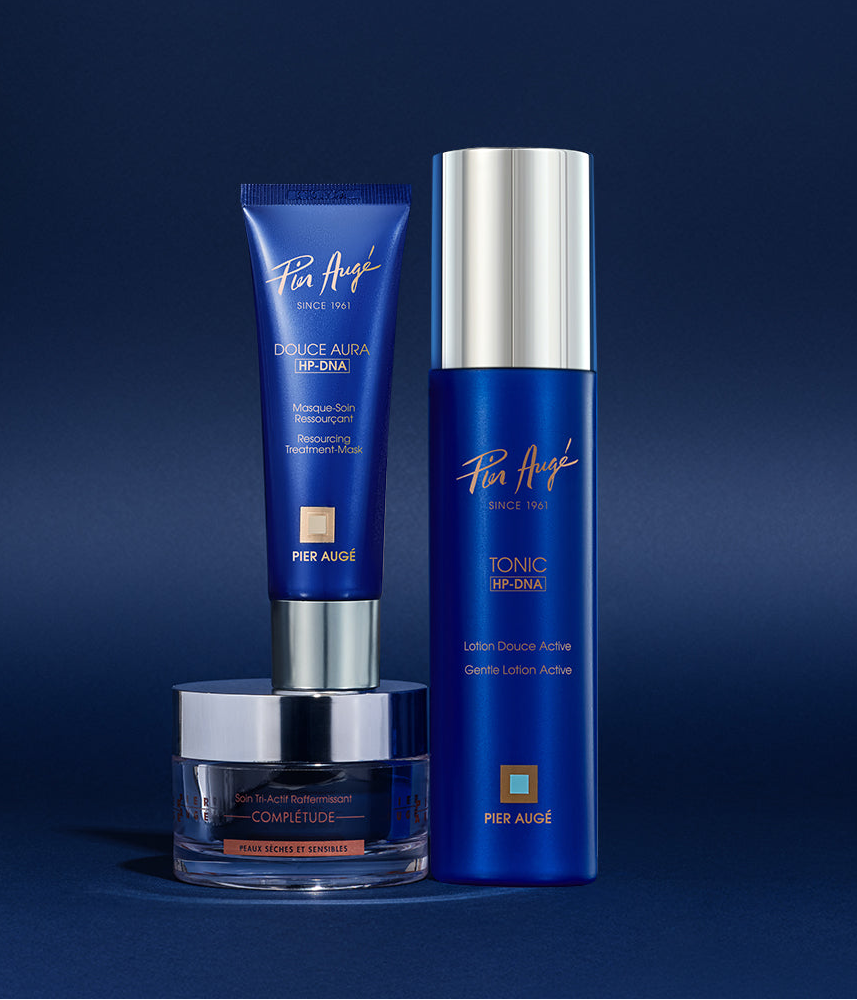
The PDRN Barrier Repair Set is particularly well-suited as a post-clay recovery system. It pairs two products: the Cleansing Cream SAVON, a sulfate-free 3-in-1 cleanser that removes residue without further stripping (formulated with plant-derived APG surfactants, Arctic Cloudberry, and Omega-6/9 fatty acids), and the Douce Aura Overnight Sleeping Mask, which delivers high-purity PDRN for overnight repair.
The logic is straightforward. Step one: gentle, non-stripping cleansing to remove any remaining clay traces. Step two: a repair mask that works through the night, when skin cell proliferation naturally peaks, to restore the barrier the clay mask temporarily disrupted.
The Douce Aura mask is the centerpiece of this recovery. Its active ingredient — high-purity PDRN, refined to 99% purity with 98% similarity to human DNA — functions as a biomimetic signal, telling skin cells to engage their own repair mechanisms. Clinical data from a 33-woman study over 14 days showed a 52.69% radiance boost and 45.86% hydration surge within 15 minutes, and over the full period, a 20.69% wrinkle reduction, 14.82% plumping improvement, and 4.50% firmness increase. The snow-melt texture applies as a white cream and transitions to a clear, weightless veil that requires no rinsing — you apply it, it absorbs, and by morning the skin has reset.
For anyone who has experienced the tight, stripped feeling after a clay mask and reached for a heavy moisturizer that only partially helped, the concept of following purification with targeted repair makes intuitive sense. Clay removes. PDRN restores. The two processes, done together, are more effective than either one alone.

Building a Complete Purify-and-Repair Routine
A clay mask once or twice a week, followed by the PDRN Barrier Repair Set, creates a cycle that addresses both sides of the skin health equation. The clay extracts what does not belong — excess oil, surface impurities, pore-clogging debris. The PDRN-powered cleanser and overnight mask replenish what was temporarily diminished — hydration, barrier lipids, and cellular repair signals.
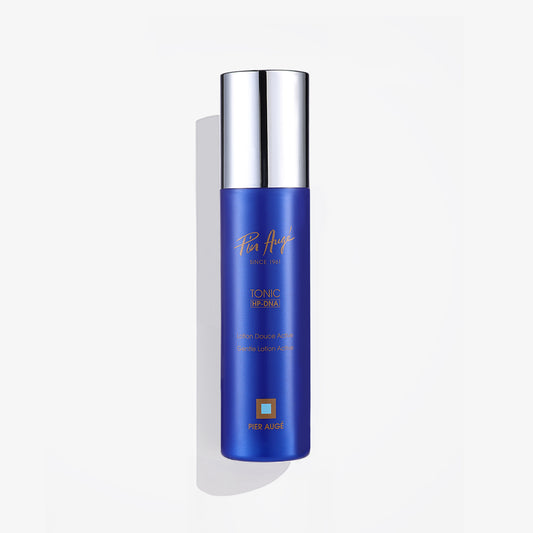
The broader Pier Augé product line supports different levels of this approach. For those who want the full systematic care, the PDRN Ultimate Regenerative Set adds the Gentle Lotion Active Tonic (a PDRN-infused toner with hyaluronic acid and pomegranate ferment) and the Firming Tri-Active Cream (with Acetyl Hexapeptide-8 and Palmitoyl Peptides for anti-aging support) to the core duo. The 3-step system — Prep, Repair, Seal — covers the complete post-clay recovery cycle.
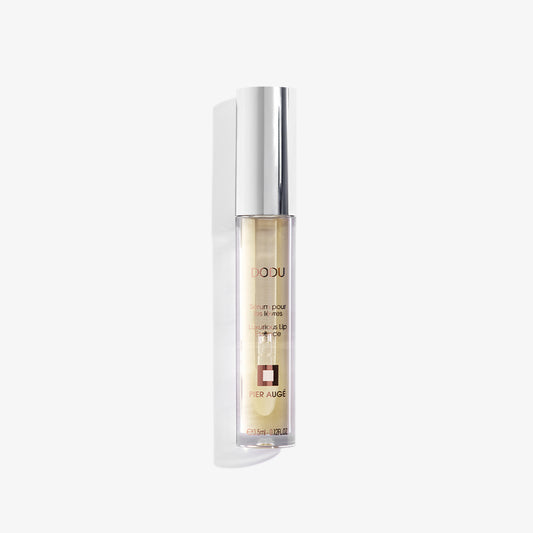
And for the most comprehensive routine, the Complete Skin Renewal Ritual — a 6-piece system spanning double cleansing, toning, overnight repair, anti-aging cream, and lip care — provides head-to-lip coverage for anyone who wants a professional-grade daily system built around the same repair-first principles.
The Bottom Line
Clay masks work. The clinical evidence is solid, and the mechanism — electrostatic adsorption of impurities onto charged clay surfaces — is well understood. A 4-week study with 75 participants showed statistically significant reductions in comedones, sebum, and TEWL alongside improved hydration (Zhang et al., Skin Res Technol, 2023). The bentonite and montmorillonite literature reviewed by Zafar et al. (2024) confirms anti-inflammatory, wound-healing, and anti-aging benefits across multiple study types (Zafar et al., Arch Dermatol Res, 2024).
But effectiveness comes with a responsibility to the skin barrier. A clay mask that strips oil without a repair strategy is an incomplete protocol. The skin needs what was removed to be restored — not with heavy, pore-clogging products, but with biomimetic ingredients the skin recognizes and knows how to use.
Pier Augé's repair-first philosophy, born from pharmaceutical training and clinical experience treating damaged skin, addresses exactly that gap. The PDRN Barrier Repair Set, anchored by the Douce Aura Overnight Mask, provides the restoration half of the purify-and-repair equation. Clay does the extraction. PDRN does the rebuilding. Together, they give you both the clean canvas and the means to keep it healthy.