

How Long to See Red Light Mask Results — A Realistic Timeline and a Faster Cellular Alternative
29 May 2026
0 comments
Most people who buy an LED face mask quit too early. They use it for two or three weeks, glance in the mirror, see no change, and toss the device into a drawer. The irony is that two to three weeks is exactly when the biological processes red light triggers are just getting started.
The question "how long to see red light mask results" deserves an honest answer — not the marketing version, but the biological one. Here is what the evidence actually says, week by week, and why some people get visible change in 15 minutes with a completely different approach.
The Real Timeline: What Happens Week by Week
Red light therapy is a cumulative process. It does not produce overnight structural change — the biology does not allow it. But it does produce a predictable sequence of effects that can be tracked if you know what to look for.
Days 1 to 7 — The Initial Glow
The first thing most users notice is a subtle warmth and radiance immediately after sessions. This is not collagen. It is nitric oxide release — red light photons trigger vasodilation, widening blood vessels near the skin surface and increasing circulation (SeekRedLight, 2026). More blood flow means more oxygen and nutrients reaching the skin. Skin may feel slightly softer. The effect fades within hours of each session at first, but with consistent use, improved circulation becomes the new baseline and the glow starts to stick around.

Weeks 1 to 2 — Texture Begins Shifting
Skin texture starts to smooth out as cellular turnover accelerates. Pores may appear slightly smaller due to reduced inflammation and better hydration. If you have mild redness or rosacea, you might see it calming down. SeekRedLight's comprehensive guide notes that "texture improves before wrinkles do because surface roughness relates to cell turnover and hydration, which respond faster than deep collagen rebuilding" (SeekRedLight, 2026).
Weeks 3 to 4 — Real Changes Emerge
This is the window where collagen production starts making a visible difference. Skin feels firmer to the touch. Fine surface lines begin softening. Skin tone becomes more even. People around you might start commenting that you look "rested" or "healthy." But this is also the window where most users get discouraged — the changes are real but subtle, and side-by-side photos in consistent lighting are more revealing than memory.
Weeks 5 to 8 — Fine Lines Respond
Fine lines around the eyes and mouth visibly reduce. Skin elasticity improves measurably. Acne marks and mild hyperpigmentation begin fading. This is the window where clinical studies "consistently show statistically significant improvements in wrinkle depth and skin roughness" (SeekRedLight, 2026). A study using 630nm LED therapy over 12 weeks documented a 36% increase in collagen density and measurable wrinkle severity reduction — significant, but not transformational.
Months 2 to 3 — Deeper Wrinkle Softening
Deeper expression lines and nasolabial folds begin to soften. Not disappear — soften. The cumulative collagen building reaches a level where structural skin firmness noticeably improves. The jawline may look slightly more defined.
Month 3+ — Maintenance Phase
Results plateau at their peak. Continued use maintains improvements. Stopping completely will gradually reverse gains over several months as collagen naturally degrades without the ongoing stimulus. Red light therapy does not produce permanent structural change — it requires ongoing maintenance, similar to exercise.
The Non-Negotiable Collagen Timeline
The fundamental constraint on LED mask results is biological: "Collagen synthesis takes time regardless of what device you use. Your fibroblasts need approximately 4-12 weeks of consistent stimulation to produce enough new collagen to visibly change your skin's structure. No mask, no matter how expensive, can speed up this biological process" (SeekRedLight, 2026).
The recommended usage frequency is 3 to 5 sessions per week at 10 to 20 minutes each. Dr. Eleonora Fedonenko, a board-certified dermatologist, specifically warns against overuse: "Patients have come in with skin that was so tight and raw, they were using the mask every day in order to speed up their results" (Fedonenko via CNET, 2026). More sessions do not produce faster results — photobiomodulation follows a biphasic dose response where excessive energy can actually inhibit the processes it is meant to stimulate.
Device quality matters enormously. Dr. Fedonenko advises that masks with irradiance below 10-30 mW/cm² "even though the light penetrates the skin, it's not strong enough to yield results" (Fedonenko via CNET, 2026). If you have been using a budget mask for 8 weeks with no visible change, the irradiance — not your skin — may be the problem.
Clinical Data That Does Not Wait 12 Weeks: Pier Augé Douce Aura
There is a different way to measure results. Instead of waiting months for collagen to accumulate from light stimulation, some skincare technologies work by engaging the skin's own repair biology directly — and the results show up on a much shorter clock. For a deeper look at how overnight masks accelerate skin repair while you sleep, Pier Augé's approach is worth examining.
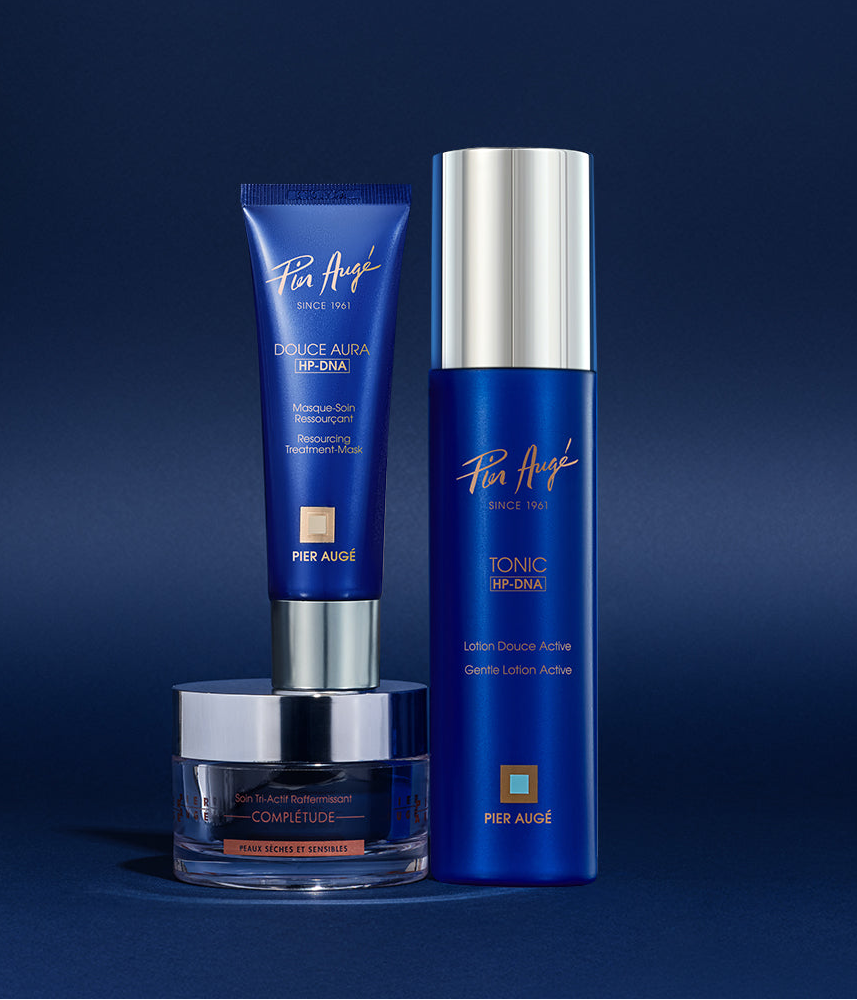
Pier Augé's Douce Aura Overnight Sleeping Mask is one of the few products in the skincare market that publishes clinical data with specific timelines and measurable percentages rather than vague "consumer perception" claims. The key differentiator is PDRN (Polydeoxyribonucleotide), an active ingredient that operates through a completely different mechanism than photobiomodulation.
Red light therapy stimulates mitochondria to produce more ATP — cellular energy that may be directed toward repair. PDRN, extracted from wild salmon milt and refined to 99% purity with 98% similarity to human DNA, functions as a biomimetic signaling molecule. The skin recognizes those long-chain DNA fragments and responds by activating its own collagen synthesis, cell proliferation, and barrier restoration pathways. It is the difference between giving a cell more fuel and handing it a repair manual.
The clinical data from a 33-woman study over 14 days breaks into two timeframes:
15-minute instant results:
-
52.69% increase in skin radiance
-
45.86% surge in skin hydration
14-day transformation:
-
20.69% reduction in wrinkle depth
-
14.82% improvement in skin plumping and volume
-
4.50% increase in skin firmness
These measurements came from validated instrumentation, not from asking participants how they felt. The 15-minute radiance and hydration boosts are immediate and visible — not the kind of subtle, "maybe I see something?" change that characterizes the first few weeks of LED therapy.
The format contributes to the speed of results. Douce Aura is an overnight mask with a snow-melt texture — it applies as a white cream and, over about 10 minutes, melts into a transparent, weightless veil that absorbs without rinsing. Because it stays on the skin for 6 to 8 hours, aligning with the body's peak nocturnal repair window (roughly 11 p.m. to 4 a.m., when skin cell proliferation and blood flow peak), the PDRN has sustained contact time with skin biology during its most active repair phase. No device, no timer, no sitting still.
Why the Two Approaches Are Complementary, Not Competitive

Comparing LED masks and PDRN skincare is not about declaring one superior. They work on different timelines through different mechanisms and, used together, can cover more ground than either one alone.
An LED mask, used 3 to 5 times per week at adequate irradiance, builds collagen over 8 to 12 weeks — a slow, structural accumulation that produces incremental but real improvement. The Douce Aura mask, used nightly or as a 2-3x weekly treatment, provides immediate radiance and hydration while building repair over 2 weeks — a faster cycle that addresses dullness and barrier compromise on a shorter clock.
For someone who wants both the slow structural investment and the fast visible payoff, the routines are compatible: red light sessions in the evening (on clean, bare skin), followed by Douce Aura overnight to provide the repair signals and building blocks that help the skin use the ATP boost from photobiomodulation.
For someone who wants results that are measurable in days rather than months, and who has no interest in wearing an LED device for 10 to 20 minutes several times a week, the Pier Augé approach is self-contained. Apply the mask. Let it melt in. Wake up to skin that looks like it did the work.
Pier Augé offers graduated systems for different commitment levels. The PDRN Intensive Recovery Set pairs the Douce Aura mask with the Firming Tri-Active Cream, which adds a multi-peptide complex — Acetyl Hexapeptide-8 and Palmitoyl Peptides — plus niacinamide and meadowfoam seed oil for comprehensive anti-aging support. The PDRN Ultimate Regenerative Set is a 3-step system: tone, repair, seal. And the Complete Skin Renewal Ritual is the full 6-piece regimen from double cleansing through lip care, all built around the same PDRN repair technology.
The Honest Answer to "How Long"
If you use an LED mask consistently at adequate irradiance, expect: a glow within days, texture improvement by week 4, fine line softening by weeks 6 to 8, and meaningful structural improvement by week 12. That is the biology. It cannot be compressed.
If you use a PDRN-powered product like Douce Aura, the clinical data shows: 52.69% more radiance and 45.86% more hydration in 15 minutes, and 20.69% wrinkle reduction with 14.82% plumping improvement in 2 weeks.
Neither timeline is marketing fiction. They are just different mechanisms operating on different biological clocks. Knowing which clock you are on makes the difference between quitting too early and seeing what actually works.