

Glass Skin Overnight Mask: Why Sleeping Is the Fastest Route to a Translucent Glow
19 May 2026
0 comments
There are two ways to chase glass skin. One is the sheet-mask route: a quick burst of hydration that looks great for a few hours, then fades. The other is the overnight route: six to eight hours of uninterrupted absorption timed to your skin's natural repair window. One gives you a temporary glow. The other builds skin that holds its own glow.
A glass skin overnight mask takes the concept of glass skin — deeply hydrated, smooth, reflective — and routes it through the time of day when your skin is most receptive. While you sleep, cell turnover peaks, blood flow to the skin increases, and the barrier becomes more permeable. Apply a well-formulated mask before bed, and you give your skin exactly what it needs at exactly the right time.
Here is why the overnight format matters, what makes a mask work, and which one delivers results you can measure.
Why Overnight, Specifically
Glass skin depends on three things working together. None of them happen in twenty minutes.
First, prolonged contact time. A sheet mask sits on your skin for 15 to 20 minutes — enough to hydrate the surface, not enough to reach the dermis. An overnight mask remains in contact for six to eight hours. That is the difference between wetting the outermost layer of dead cells and actually delivering active ingredients to living tissue.
Second, alignment with the skin's circadian rhythm. Research published in Nature has shown that epidermal stem cell proliferation follows a 24-hour clock, with repair activity concentrated during nighttime hours (https://doi.org/10.1038/nature10649 ,Janich et al., Nature 2011). Your skin is in repair mode while you sleep. An overnight mask supplies the raw materials — humectants, lipids, regenerative actives — at the moment they are most needed.
Third, occlusion without interruption. A daytime moisturizer gets wiped off, rubbed against, and degraded by UV exposure. An overnight mask stays in place. Nothing disrupts the seal it creates. The water stays where it belongs.
This is why an overnight glass skin mask is not just another product category. It exploits a biological advantage that no daytime product can match.
What an Overnight Glass Skin Mask Needs to Do
Not every nighttime product qualifies. Here is the checklist.
Humectants to pull water in. Hyaluronic acid, glycerin, sodium PCA. Without these, the mask is just a greasy layer on top of dehydrated skin. Hyaluronic acid can bind up to 1,000 times its weight in water (https://doi.org/10.1007/s13555-021-00566-0 ,Draelos et al., Dermatol Ther 2021</a>). That capacity only matters if the water is sealed in — which brings us to the next requirement.
Occlusives to lock water in. Shea butter, squalane, fatty acids. These create the breathable barrier that prevents transepidermal water loss. Without occlusion, the water drawn in by humectants evaporates within an hour or two, and your skin wakes up drier than before.
Regenerative actives to build lasting change. Hydration is the entry point for glass skin. But lasting glass skin — the kind that is visible without a mask — requires barrier repair and collagen support. Ceramides rebuild the lipid barrier. Niacinamide boosts natural ceramide production. PDRN (polydeoxyribonucleotide) signals fibroblasts to produce collagen and activates the adenosine A2A receptor pathway that triggers tissue regeneration (https://doi.org/10.1111/jocd.16721" ,Lampridou et al., J Cosmet Dermatol 2025</a>).
A mask with all three — humectants, occlusives, regenerative actives — does not just make skin look glassy for a day. It makes skin become more glass-like over time.
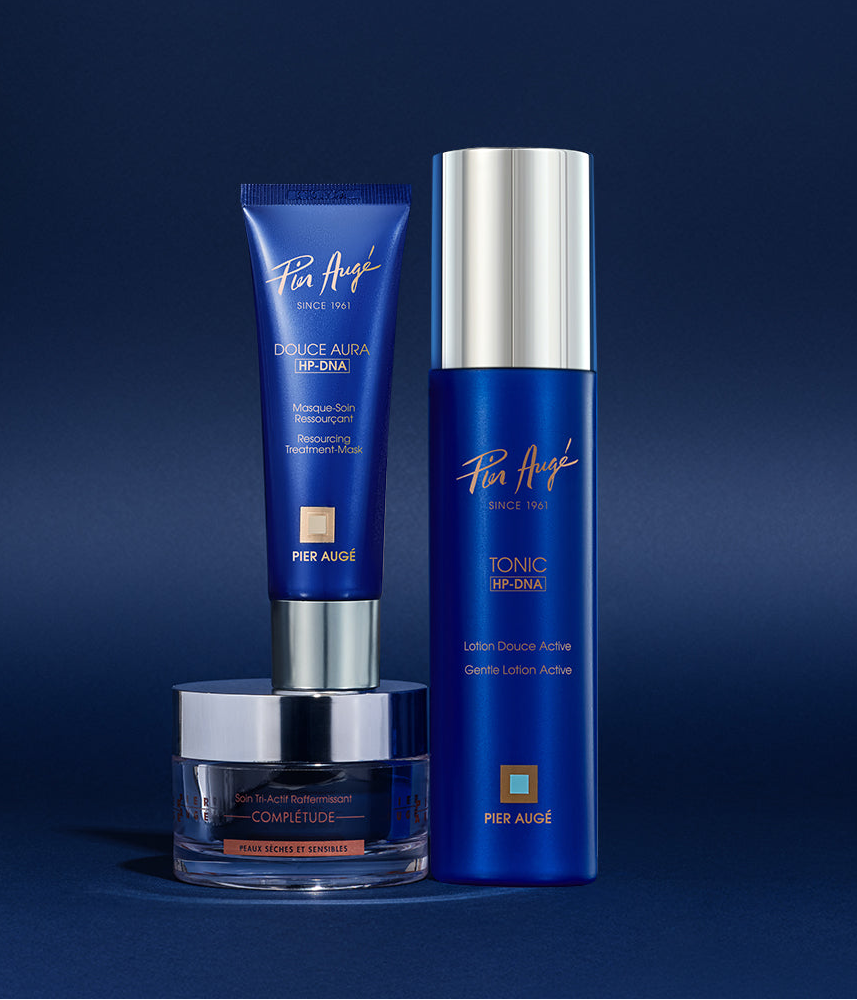
Our Pick: Pier Augé Douce Aura Overnight Mask
The Pier Augé Douce Aura Overnight Sleeping Mask checks all three boxes with data to support each one.
It comes from a French pharmacy brand founded in 1961 by two pharmacists. Their core technology is medical-grade PDRN — DNA fragments refined to 98% similarity with human DNA. This is the ingredient that moves the mask from a temporary hydrator to a product that actually changes how your skin functions.
The Clinical Data
Pier Augé tested the Douce Aura mask on 33 women over a 14-day period, with measurements at multiple time points. The results at the 15-minute mark tell you about immediate effect. The results at the 14-day mark tell you about cumulative change.
Immediate results — 15 minutes after a single application:
|
Metric
|
Change
|
|
Skin radiance
|
+52.69%
|
|
Hydration level
|
+45.86%
|
Longer-term results — after 14 days of consistent use:
|
Metric
|
Change
|
|
Wrinkle depth
|
-20.69%
|
|
Skin plumpness
|
+14.82%
|
|
Skin firmness
|
+4.50%
|
The 15-minute radiance boost tells you the hydration works — it is visible the first time you use it. The 14-day wrinkle reduction and plumping data tell you something more important: the active ingredients are reaching the dermis and producing structural change. This is not a temporary optical effect. It is skin that holds more water and reflects more light because its collagen matrix is denser and its barrier is stronger.
The Snow-Melt Experience
The application process is simple enough to describe in three steps:
|
Step
|
When
|
What Happens
|
|
Apply
|
0 min
|
Smooth a thin layer over clean skin. Texture is creamy and rich.
|
|
Melt
|
~10 min
|
The formula shifts from white to translucent as it absorbs. No stickiness.
|
|
Reveal
|
~15 min
|
A velvet finish. Massage in excess. Go to sleep. No rinse needed.
|
By the time you go to bed, the product has absorbed completely. It will not transfer to your pillow. In the morning, your skin is not wearing a mask — it just looks like better skin. That is the goal.
What Is Inside
The ingredient list is worth reading:
|
Ingredient
|
Role in Glass Skin
|
|
HP-DNA (PDRN) Complex
|
Regenerative signaling — triggers collagen synthesis and cell turnover
|
|
Arctic Cloudberry
|
Strengthens the microbiome, supports barrier resilience
|
|
Omega-6 & Omega-9
|
Deep fatty acid nourishment without heaviness
|
|
Bisabolol
|
Calms inflammation — redness undermines glass skin's even tone
|
|
Shea butter
|
Primary occlusive — seals in hydration for hours
|
|
Vitamin E
|
Antioxidant shield against environmental dullness
|
The formula skips parabens, sulfates, and unnecessary irritants. It is dermatologist and ophthalmologist tested. One 50ml jar lasts two to three months — a pea-to-almond-sized amount covers the full face and neck.
Who It is For
Dry skin gets the hydration it has been missing without the heavy, greasy feel that makes some night masks unpleasant to wear. Oily and combination skin get moisture without triggering excess sebum — the formula is oil-free and non-comedogenic. Sensitive skin tolerates it because PDRN is non-irritating by nature, and bisabolol actively calms. Mature skin gets the collagen support and structural firming that basic moisturizers do not provide.
The mask costs $59.99.
Overnight Mask vs Sheet Mask for Glass Skin
This is worth addressing directly because both are marketed as glass-skin tools.
A sheet mask works by occlusion for 15 to 20 minutes. The physical sheet creates a seal. The serum underneath absorbs rapidly. The effect is immediate — your skin looks plumper and brighter for the rest of the day. But the next morning, you are back to baseline. The hydration that sheet masks provide is surface-level, and surface-level hydration evaporates.
An overnight mask works by occlusion for six to eight hours. The seal is chemical, not physical — shea butter and fatty acids create it. The extended contact time allows active ingredients to reach deeper layers of the skin. And because the application coincides with your skin's peak repair window, the regeneration that the mask stimulates is synergistic with your body's own processes.
Neither is better in absolute terms. A sheet mask is ideal for an event-day glow. An overnight mask is the tool for building glass skin that lasts beyond the evening.
If you can only pick one, pick overnight. It does everything the sheet mask does, and then it does more.
How to Use Your Overnight Glass Skin Mask
The steps are simple, but the order matters.
Before bed:
-
Double cleanse. Oil-based cleanser first to dissolve sunscreen and makeup. Water-based cleanser second to remove what remains. A clean surface is non-negotiable — occluding dirt under a mask for eight hours will cause breakouts.
-
Tone. A hydrating toner pre-wets the skin. The mask seals in whatever moisture is present when it is applied. More pre-hydration means more locked-in results.
-
(Optional) Serum. If you use a treatment serum — niacinamide, peptides, vitamin C — apply it before the mask. The occlusive layer doubles the serum's effectiveness by preventing evaporation.
-
Apply the mask. A thin, even layer across your face, neck, and eye area. A pea-to-almond-sized amount is enough. More product does not equal more results.
-
Wait. Give it 15 to 30 minutes to absorb before your head touches the pillow. Full absorption means no transfer.
In the morning:
-
Cleanse. Lukewarm water and a gentle cleanser remove residual product and the waste products your skin shed overnight.
-
SPF. Your freshly hydrated, newly smooth skin is more vulnerable to UV damage than skin that is dehydrated and rough. Protect the results.
Frequency: Two to three times per week as a treatment. Nightly use is fine for particularly dry or stressed skin. The Pier Augé Douce Aura mask is light enough for daily wear if you choose.
FAQ
Can I really wake up with glass skin from one overnight mask?
You can wake up with visibly more radiant, plumper skin after a single use. The +52.69% radiance boost from the Pier Augé clinical data was measured after one application. Lasting glass skin — the kind you see without a mask — builds over two to four weeks of consistent use.
How is an overnight glass skin mask different from a night cream?
A night cream maintains your skin's baseline hydration. An overnight mask treats it. The mask has a higher concentration of active ingredients, a richer occlusive profile, and is designed for deeper penetration. Use a night cream daily. Use an overnight mask two to three times per week as a boost. The Pier Augé mask bridges that gap — it is formulated to work as both.
Will an overnight mask break me out if I have oily skin?
Not if you choose an oil-free, non-comedogenic formula. Dehydrated oily skin overproduces sebum to compensate for water loss. Proper hydration can reduce oiliness. Apply a thin layer, let it absorb fully before bed, and cleanse thoroughly in the morning.
Can I use an overnight mask with retinol?
Yes — but apply retinol first, let it absorb for ten minutes, then apply the mask on top. The occlusive layer will intensify the retinol's absorption, which can increase both results and irritation. Start with a low frequency and adjust based on how your skin responds.
How long does it take to see lasting results?
The Pier Augé clinical trial tracked results over 14 days. Wrinkle depth was down 20.69% at the two-week mark, with continued improvement expected over longer periods. For barrier repair and lasting hydration, plan on four weeks of consistent use. Glass skin is a project, not an event.
An overnight glass skin mask works because it respects how skin actually functions. It delivers hydration when the barrier is most permeable. It supplies regenerative actives when repair is most active. It stays in place, uninterrupted, for hours.
The Pier Augé Douce Aura Overnight Mask takes that logic and backs it with data. Fifty-two percent more radiance in fifteen minutes. Twenty percent fewer wrinkles in two weeks. A texture that absorbs completely so your pillow stays clean and your skin wakes up looking like it got more sleep than you did.
That is not marketing. That is chemistry working on your behalf while you are unconscious.