Best Face Mask Remove Blackheads: What Works Best?
20 Jun 2026
0 comments
If you've ever stared at the tiny dark dots across your nose or chin, you've probably searched for the best face mask remove blackheads strategy that actually delivers. The truth is, blackheads - technically called open comedones - are not dirt trapped in pores. They are a mixture of sebum, dead skin cells, and melanin that has oxidized upon contact with air, creating that characteristic darkened tip. That means the right mask isn't just about forceful extraction; it's about regular, gentle decongestion paired with barrier care.
In this guide, we'll walk through exactly what makes a mask effective, how to match one to your skin type, and why some of the most popular quick fixes fall short. You'll come away knowing which best face mask to remove blackheads genuinely fits your routine, not just your impulse buy cart.
Key Takeaways
-
No mask can permanently erase blackheads in one use; consistent exfoliation and oil balance are what gradually smooth the appearance of pores.
-
For oily, congestion-prone skin, clay or salicylic acid masks are generally the strongest best face masks to remove blackheads options.
-
If your skin is sensitive, over-treated, or prone to redness, a gentler hydrating mask can support the barrier between active decongesting treatments.
-
PDRN overnight masks, including Pier Auge Douce Aura, work as a nighttime recovery step - not as a blackhead extraction product - helping maintain comfort when you're cycling stronger treatments.
What face mask is best for blackheads?
To answer "what face mask is best for blackheads," you first need to understand that blackheads start inside the follicle. Dead cells and excess oil form a plug that stretches the pore opening. Over time, that plug oxidizes and darkens. So a mask that truly helps must do more than sit on the surface; it needs to absorb excess sebum, gently exfoliate, or both.
Before you pick a formula, it helps to map out what each major category actually does. The table below compares the most common blackhead mask types for quick reference.
|
Mask Type
|
Best Use Case
|
Limitations
|
Ideal Skin Type
|
|---|---|---|---|
|
Clay (kaolin/bentonite)
|
Absorbing excess oil, temporarily refining pore appearance
|
Can over-dry if left too long; may not exfoliate deeply
|
Oily, combination, normal
|
|
Salicylic acid (BHA)
|
Penetrating pores to dissolve oil and dead skin buildup
|
May irritate very sensitive or dry skin
|
Oily, acne-prone, combination
|
|
Charcoal
|
Supporting oil absorption with a mild detox effect
|
Limited evidence for deep pore clearance; best as a supporting ingredient
|
Oily, combination
|
|
Sulfur
|
Drying active pimples, reducing surface congestion
|
Can have an odor; too drying for dry/sensitive skin
|
Acne-prone, oily
|
|
Hydrating/barrier (e.g., overnight PDRN masks)
|
Calming, restoring moisture after stronger treatments
|
Not designed to extract or exfoliate blackheads
|
Sensitive, dehydrated, post-treatment
|
|
Peel-off
|
Satisfying visible removal of surface debris/sebaceous filaments
|
Risk of barrier damage, broken capillaries; cannot reach deep plugs
|
Not recommended for regular use
|
As you can see, what is the best face mask for blackheads depends heavily on your skin's current tolerance and the underlying oiliness. The next section breaks down the ingredients that make some masks noticeably more effective than others.
Best face mask to remove blackheads: ingredients that matter
When you're scanning labels for the best face mask to remove blackheads, it's not the marketing claims that count - it's the active ingredients. Focusing on a few research-backed components will get you further than chasing trendy names.
Salicylic acid (BHA) is the standout. Because it's oil-soluble, it can work its way into the pore lining and gently break apart the glue of dead skin cells and sebum that forms a blackhead plug. The American Academy of Dermatology lists salicylic acid as an ingredient that helps open clogged pores and exfoliate the skin, which is why you'll see it in so many congestion-targeting products salicylic acid and clogged pores. For a mask, look for a 1-2% concentration that stays on the skin for 5 to 15 minutes.
Kaolin and bentonite clays work differently. They don't chemically exfoliate; instead, they draw surface oil and impurities through absorption. Kaolin is the gentler choice for combination or slightly dry skin, while bentonite is more absorbent and best reserved for oily, resilient skin. When a mask combines clay with a BHA, you get both oil control and pore penetration.
Charcoal often triggers the - detox - buzz, but its role is more modest. Activated charcoal can bind to some surface impurities, yet no high-quality evidence suggests it reaches deep inside pores or dissolves blackheads on its own. Consider charcoal a supportive teammate rather than the star player.
Sulfur has a long history in acne care. It helps dry out the surface of a clog and can reduce the appearance of blackheads temporarily, but its strong drying effect makes it a poor fit for sensitive or already-stripped skin.
Beyond the main actives, the best facial mask to remove blackheads won't ignore the rest of the formula. Niacinamide can help balance oil production over time without irritation. Glycerin, squalane, and bisabolol keep the mask from being punishingly dehydrating. If you want to use a decongesting mask regularly without wrecking your barrier, those secondary ingredients matter enormously.
The updated AAD acne guidelines note that topical salicylic acid is a conditional recommendation for unclogging pores and exfoliating the skin, which reinforces why it remains a first-line ingredient choice for blackhead-focused masks topical salicylic acid guidance.
Best face masks to remove blackheads by skin type
Since blackheads aren't exclusive to oily skin, the best face masks to remove blackheads must account for how your skin behaves day to day. The same harsh clay mask that clears a T-zone can leave dry cheeks tight and flaky. Conversely, a gentle cream mask may do nothing for stubborn nose congestion.
For oily skin, start with a bentonite or kaolin-bentonite clay mask containing 1-2% salicylic acid. Using this 1-2 times per week can help keep pore plugs from hardening. If your skin tolerates it well, a mask with added sulfur can offer extra congestion relief.
For combination skin, multi-masking is your friend. Apply a clay or BHA mask only to the T-zone and a hydrating formula on the cheeks. Alternatively, choose a milder kaolin mask with niacinamide that will not over-strip balanced areas.
For dry skin, blackheads are often linked with slower cell turnover. A gentle salicylic acid mask used sparingly, once a week at most, paired with a rich, non-comedogenic moisturizer afterward usually works better than aggressive clay. Avoid bentonite and sulfur.
For sensitive or redness-prone skin, skip strong acids and highly absorbent clays. Instead, rely on a short-contact salicylic acid wash or a creamy mask with soothing ingredients like bisabolol and shea butter. Regular gentle exfoliation through a leave-on BHA toner may be less irritating than a concentrated mask.
For acne-prone skin, a mask with salicylic acid plus niacinamide can target both blackheads and the surrounding inflammation. Sulfur masks can also help, but watch for over-drying, especially if you are also using retinoids or benzoyl peroxide in your routine.
For mature skin, the primary concerns are pore laxity and slower cell renewal. A modest BHA mask once a week, followed by a deeply hydrating overnight cream, can address congestion without sacrificing the plumpness and hydration that aging skin craves.
The primary keyword, best face mask remove blackheads, fits naturally here: there isn't a single product that wins across all skin types, but matching your skin's oil level and sensitivity is what elevates a mask from risky to reliable.
Why peel-off masks are not always the best facial mask to remove blackheads
If you've ever peeled off a satisfying blackhead strip and marveled at the tiny spikes left on the adhesive, you know the instant gratification. Yet dermatology sources consistently caution that visible plugs pulled off are often sebaceous filaments or the topmost layer of the pore plug, not a full deep clearance. Meanwhile, the aggressive tugging can compromise the skin barrier, stretch the pore opening, and increase the risk of broken capillaries over time.
Cleveland Clinic notes that comedonal acne - the category that includes blackheads - can be difficult to treat because comedones are lodged within follicles. Topical approaches like salicylic acid, retinoids, and azelaic acid are preferred, while extractions, when necessary, should ideally be done by trained professionals comedonal acne treatment options. A peel-off mask worn at home cannot replicate that precision, and the repeated mechanical stress can actually make pores look larger in the long run.
This doesn't mean you must abandon every peel-off product forever. Used sparingly on resilient skin, a gentle charcoal peel-off mask may remove some surface debris without major harm. But if you're building a routine specifically around the best facial mask to remove blackheads, a leave-on clay or BHA mask that works chemically rather than mechanically will almost always be the safer, more effective choice over repeated uses.
For a deeper look at how peel-off masks compare to rinsable formulas and leave-on treatments, you might find our peel-off mask application guide helpful.
How to use a blackhead face mask without over-drying your skin
Even the most effective mask can backfire if it strips the skin so severely that the barrier becomes inflamed. That inflammation can paradoxically trigger more oil production and make blackheads look worse. Following a consistent, gentle protocol ensures you get the decongesting benefits without the sandpaper side effects.
-
Cleanse first, but gently. Use a non-stripping gel or cream cleanser. If you're wearing heavy sunscreen or makeup, an oil-based first cleanse can help dissolve surface sebum without scrubbing. Avoid harsh physical exfoliants immediately before a mask.
-
Apply to damp or dry skin according to instructions. Some clay masks work best on slightly damp skin to reduce pulling; some salicylic acid masks require a dry surface. Follow the specific product guidance.
-
Watch the clock. Most blackhead masks should stay on for 5 - 15 minutes. Leaving a clay or BHA mask on until it cracks not only fails to add benefits but also risks over-drying and irritation. Set a timer.
-
Rinse with lukewarm water using gentle circular motions. Avoid hot water, which can exacerbate redness. Pat (don't rub) skin dry with a clean towel.
-
Follow immediately with a barrier-supporting moisturizer. Look for ingredients like niacinamide, glycerin, or ceramides. If your mask was active-heavy, skip additional exfoliating toners or serums that night.
-
Apply SPF in the morning. Many exfoliating masks increase sun sensitivity, making broad-spectrum protection non-negotiable the next day.
On nights when you've used a clay or BHA mask, your skin may feel comfortably clean but also slightly vulnerable. That's the ideal moment to follow with a deeply hydrating, leave-on treatment that restores calm without clogging pores - a point we'll expand on next. The NCBI's discussion of open comedones reminds us that salicylic acid manages, rather than permanently erases, the follicular plugging that defines blackheads, so supporting the skin barrier between treatments helps maintain a steady, non-reactive complexion open comedones and acne management.
Where a PDRN overnight mask fits in a blackhead routine
By now, it's clear that blackhead management isn't a one-product solution. The masks that actively decongest tend to be drying; if you overuse them, your barrier weakens and your skin's ability to tolerate exfoliants dips sharply. That's where a complementary, deeply reparative overnight mask earns its place - not as a blackhead extractor, but as the comfort anchor that lets you sustain your active routine.
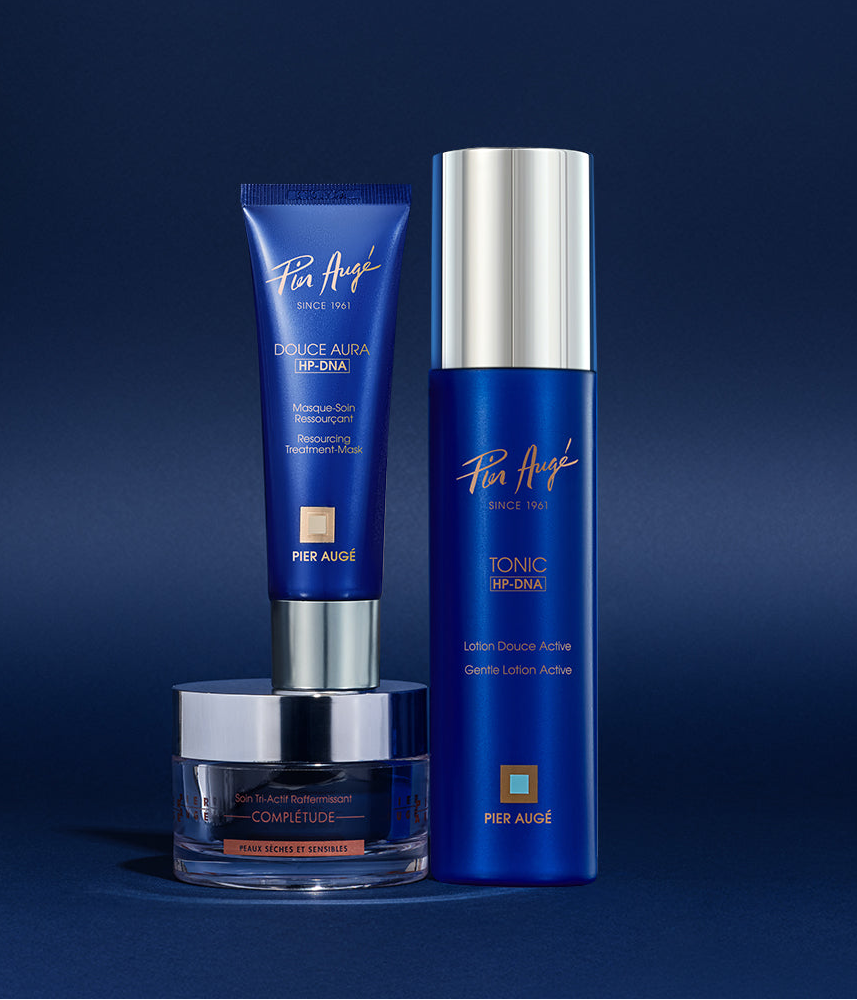
The best face mask to remove blackheads routine can include Pier Augé Douce Aura Overnight Mask as the recovery-night step, not the extraction step. Founded in France in 1961 by pharmacists Pierre-Jules Auge and Lucienne Auge, Pier Augé built its philosophy around repair and the belief that skin needs to be restored to its natural balance before it can truly thrive. Douce Aura embodies this with a focused, science-led formula designed for overnight recovery.
The mask uses High-Purity PDRN, a signature ingredient with 98% similarity to human DNA. Rather than sitting on top of the skin, it works with the skin's natural regenerative signals, supporting a smoother, more hydrated texture by morning. Alongside the PDRN, a thoughtful blend of Arctic Cloudberry, Omega-6 and Omega-9 fatty acids, Bisabolol, Shea Butter, and Vitamin E creates a comforting cream-to-veil texture that changes from white to translucent as it absorbs. There's no need to rinse; you simply apply a thin layer after your evening cleanse, let it settle for about 15 minutes, and then gently massage any remaining veil into the skin.
This is not a pore-extraction product. It doesn't contain salicylic acid or dissolving clays, and it won't dislodge a deep blackhead overnight. What it does is far more strategic for anyone cycling stronger decongesting masks: it replenishes hydration, soothes irritation, and gives the skin the calm environment it needs to recover between exfoliating sessions. Over time, that reliable barrier support often means you can use your weekly clay or BHA mask more consistently - without crossing into raw, over-processed territory.
If you're curious about how the PDRN technology in this formula works at a biomimetic level, you can read more on the brand's dedicated pdrn mask page. When you think of the best face mask to remove blackheads, you might initially picture something powerfully exfoliating. But equally important is the mask you apply on the nights in between - the one that keeps your skin resilient, comfortable, and able to continue the exfoliating routine that truly makes a difference over time.
FAQ
What face mask is best for blackheads if my skin is oily?
For oily skin, a clay mask containing 1 - 2% salicylic acid is generally the most effective combination. The clay absorbs surface oil and temporarily refines pore appearance, while the salicylic acid penetrates the follicle to dissolve the sebum and dead-cell plug. Using this type of mask once or twice a week, followed by a light, oil-free moisturizer, tends to produce the best visible results without excess drying.
What is the best face mask for blackheads if my skin is sensitive?
If your skin flushes easily or stings with strong actives, the gentle first choice is a kaolin-based clay mask with soothing ingredients like bisabolol or niacinamide - avoiding bentonite, sulfur, and high-percentage acids. Alternatively, you might skip a traditional mask entirely and instead use a leave-on 0.5 - 1% salicylic acid serum every other night, paired with a rich barrier cream. A hydrating overnight mask like Pier Auge Douce Aura can also replenish the barrier so that even sensitive skin can better tolerate very mild weekly exfoliation.
Can a clay mask remove blackheads permanently?
No. Clay masks temporarily absorb excess surface oil and can make pores appear smaller for a day or two, but they do not alter the structural size of the pore or permanently dissolve the plug deep within the follicle. Consistent use, combined with chemical exfoliants and good barrier maintenance, keeps blackheads from reforming quickly, but permanent removal in a single application is not possible with any topical mask.
Are charcoal masks better than salicylic acid masks for blackheads?
Not for deep blackhead removal. Charcoal can help absorb some surface impurities and oil, making it a useful ingredient in masks for overall skin clarity, but it lacks the ability to penetrate pores and break down the actual plug. Salicylic acid, because of its oil-soluble nature, is far more effective at chemically exfoliating inside the follicle and reducing blackheads over time. Ideally, a mask that combines both ingredients gives you surface and deep-clearing benefits.
How often should I use a face mask for blackheads?
Most clay or BHA masks should be used once or twice a week at most, depending on your skin's tolerance. Start with once a week on a non-consecutive night, and never layer a decongesting mask with other strong exfoliants (like retinoids or scrubs) on the same evening. If you notice redness, tightness, or flaking, reduce frequency and prioritize a barrier-repairing overnight mask on your recovery nights.
Conclusion
Finding the best face mask remove blackheads experience ultimately means building a system, not searching for a miracle jar. For most people, a weekly clay or salicylic acid mask does the heavy lifting by absorbing excess oil and gently exfoliating the pore lining. If your skin is sensitive, shifting to a milder kaolin formula or a short-contact BHA wash will be far more sustainable than forcing a strong mask that leaves your barrier inflamed.
The other half of the equation - often overlooked - is what you do between those decongesting treatments. Using a restoring overnight mask on recovery nights gives your skin the hydration and calm it needs to stay stable. When your barrier is intact, your weekly blackhead mask works better, and you're far less likely to spiral into the over-drying-and-rebound-oil cycle that makes blackheads seem impossible to manage.
That's where a formula like Pier Auge Douce Aura Overnight Mask fits neatly. It's not a blackhead cure - and it doesn't claim to be. It's the comfort layer that keeps your skin receptive, soft, and ready for the active steps that actually shift congestion over time. If you've been struggling to find a mask routine that doesn't leave your face feeling tight and reactive, consider pairing your targeted decongesting mask with a deeply restorative overnight step. The best results usually come from balancing power with patience.