

When to Use a Face Mask in Skin Care Routine
When to use a face mask in skin care routine planning depends on the mask format. Start with clean skin. Wash-off, sheet, and hydrogel masks commonly come before moisturizer, while an overnight leave-on mask belongs near the end of your evening routine. Most importantly, the product label on the mask you own is the final authority.
Read on for a 1-minute format decision, three copyable morning and evening sequences, and real-world routine experience to make your mask fit seamlessly.
One Question, Three Different Answers

The "universal rule" trap is expecting one answer. What's universal is starting on clean skin. The placement itself shifts.
Three things are easy to confuse: routine order, wear time, and weekly frequency. This guide covers order only. For wear time guidance, see our guide on how long to keep a face mask on. For frequency, check our face mask frequency guide.
Morning versus evening matters less than the formula's directions. If you use a treatment prescribed by a dermatologist, keep that plan intact and ask where an optional mask belongs instead of moving the treatment on your own.
Here's the principle that resolves every conflict: the current product label controls order, wear time, and frequency. A mask is a supplement to basic care, not a replacement for it, and the label tells you how your formula wants to be used (Source: American Academy of Dermatology on facial masks).
Meet Your Mask Format: A 1-Minute Decision
Before deciding when to put your face mask in your skin routine, identify its format. Is it rinsed off, left on, or worn overnight? That single choice dictates where it belongs.
Rinse-Off Masks (Clay, Exfoliating, Cream-Gel Wash-Off)
Rinse-off masks sit early in the routine, on freshly cleansed skin. This includes clay masks, exfoliating masks with acids or enzymes, and cream-gel formulas meant to be washed off.
Cleanse first, apply the mask, let it sit for the time stated on the label, then rinse. Follow with toner if you use one, then serum and moisturizer. The American Academy of Dermatology recommends applying moisturizer after washing off a mask to seal in hydration (Source: AAD facial mask guidance).
What changes: only the mask step moves into your routine. Everything else stays the same.
Sheet Masks and Hydrogel Masks
Sheet and hydrogel masks are commonly no-rinse treatments. A typical order is: cleanse, optionally tone, apply the mask, remove it after the label's stated time, pat in remaining essence if directed, then follow with moisturizer.
Whether serum comes before or after depends on your product directions and routine. Many users apply a lightweight serum after the mask and before moisturizer. Some sheet mask systems specifically direct you to skip serum because the mask essence is concentrated enough.
What changes: you replace your usual treatment step with the mask, then continue your moisturizer as normal.
Overnight (Leave-On) Masks
Overnight masks belong near the end of the evening routine. Some go over moisturizer; richer formulas may replace it entirely. The label on your jar decides.
A typical sequence is cleanse → optional treatment or serum → moisturizer and/or overnight mask, in the exact order the label directs. Some formulas go over moisturizer; others take its place.
What changes: the mask becomes your final leave-on step — no rinsing, no reordering of earlier steps.
Three Copyable Sample Sequences

Morning Sequence with a Rinsing Mask
If you're masking in the morning, keep it simple and protect your skin afterwards.
- Cleanse with a gentle cleanser.
- Apply the rinsing mask to clean skin; let it sit per label directions.
- Rinse thoroughly and pat skin dry.
- Moisturize to restore hydration.
- Finish with SPF — the final morning step, even on mask days.
The American Academy of Dermatology confirms sunscreen is the last protective step in the daytime routine (Source: AAD on product application order).
Evening Sequence with a Sheet or Hydrogel Mask
Sheet masks are a no-mess way to add hydration or targeted care at night.
- Cleanse to remove makeup, sunscreen, and day buildup.
- Tone if your mask label calls for it — or if toner is part of your standard routine.
- Place the sheet mask over clean skin; leave on for the label's stated time.
- Remove and gently pat remaining essence into skin — don't rinse.
- Apply moisturizer to seal in hydration.
Some people add serum after the mask and before moisturizer when the mask label doesn't direct otherwise.
Evening Sequence with an Overnight Mask
Overnight masks are designed for sustained contact while you sleep.
- Cleanse thoroughly.
- Apply treatment or serum as usual.
- Apply moisturizer, overnight mask, or both — in the exact order stated on the label you own.
If your label says apply over moisturizer, follow that. If it says the mask replaces moisturizer, follow that instead. Label instructions win.
Ask the Label: When Your Mask Disagrees With a Generic Routine
Different brands place overnight masks differently: some instructions put the mask before moisturizer, while others use it as the last cream step. When guidance conflicts, follow the current label on the product you own. If a dermatologist has given you a routine for a skin condition, follow that plan.
Toner Question
If your mask label says "apply after toner," follow it. If it says "apply after cleansing," toner is optional before the mask — use it if it's part of your normal routine.
Serum Question
Short-wear masks commonly precede leave-on serum. Some sheet mask systems specify another order, so read the label. Overnight masks generally come later in the routine, after serum.
Moisturizer Question
After a wash-off mask, continue with moisturizer. For overnight masks, the label decides whether the mask goes over moisturizer or replaces it.
Redundancy Warning
Avoid stacking redundant, potentially irritating actives. If your mask contains exfoliating acids and your routine already includes retinol or another acid product, simplify the routine rather than doubling up. Stop and rinse off a mask if itching, burning, or stinging develops (Source: AAD facial mask guidance).
What Customers Notice About Overnight Cream Masks
Hearing how a product feels during a real routine helps set expectations. One verified customer shared how a leave-on cream mask settled into her evening routine:
— C. W., verified customer
Her experience highlights texture and convenience: a cream-mask consistency that spreads easily and absorbs quickly, without the rinse step of a wash-off format. This type of feedback is specific to that product and one person's routine — it's a feel-and-fit observation, not a claim about universal results.
The Overnight Option: Your Final Leave-On Step
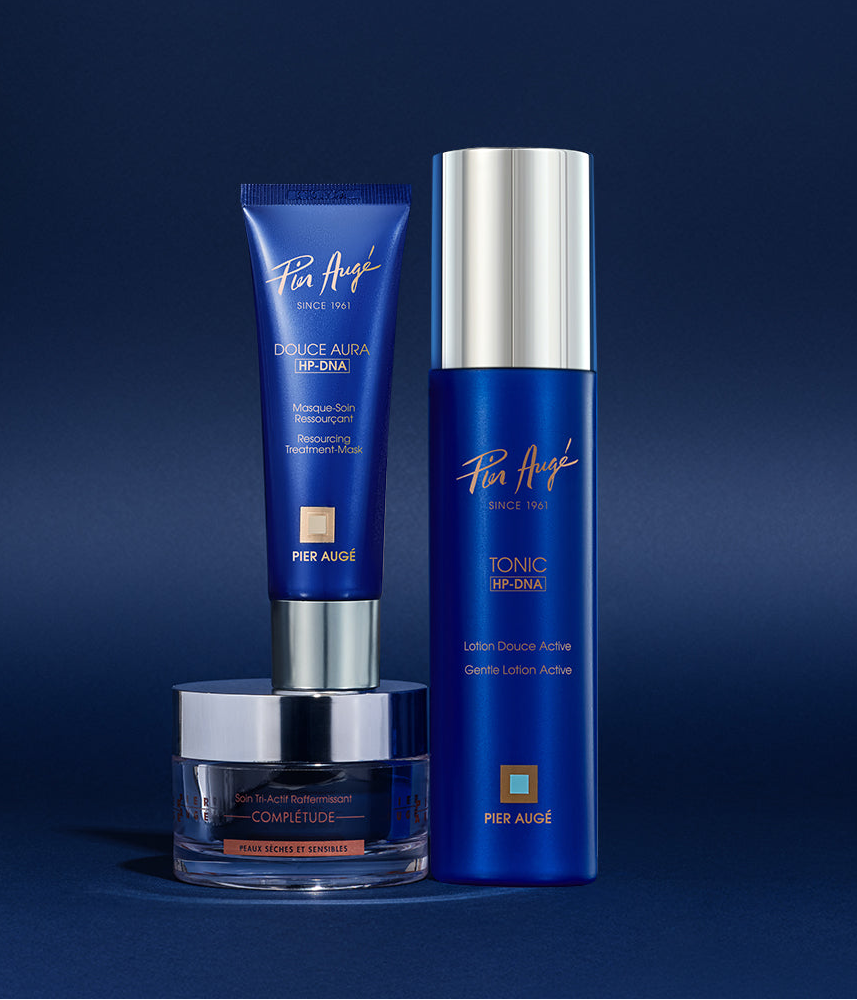
If you're ready to try a leave-on overnight format, consider Douce Aura Overnight Mask — a 50 ml cream mask designed for overnight use. It fits near the end of an evening routine, but follow the current label for the exact order, amount, and frequency. Because it is left on rather than rinsed off after a short session, it can keep a mask night refreshingly simple without adding a separate removal step. Explore it here:
View Douce Aura Overnight Mask
FAQ: Face Mask Routine Questions, Answered
Should I use a face mask before or after my serum?
For wash-off, sheet, and hydrogel masks, apply the mask on clean skin before your serum. For overnight masks, apply serum first, then the mask as your final step — unless the label directs otherwise.
Can I apply a face mask after moisturizer?
A wash-off mask is normally used before moisturizer because you rinse the mask away, then continue with leave-on hydration. An overnight mask may go over moisturizer or replace it, depending on the product label.
Do I use toner before a face mask or after?
It depends on the mask's label. Some formulas specify application after toner; others direct you to apply immediately after cleansing. When in doubt, follow the label's order.
Where does an overnight mask go in the evening routine?
An overnight mask sits near the end of your evening sequence. The label determines whether it goes over your moisturizer or replaces it. In the morning, you simply cleanse as usual — no extra rinse-off step.