

PDRN vs Retinol: The Complete 2026 Guide to Choosing Your Anti-Aging Ingredient
11 May 2026
0 comments
Key Takeaways
Retinol is a vitamin A derivative. It speeds up cell turnover and ramps up collagen production. It also frequently causes irritation, peeling, and sun sensitivity during the first few weeks. Some people never get past that phase.
PDRN (Polydeoxyribonucleotide) is DNA fragments, usually from salmon. It supports your skin's own repair systems instead of overriding them. No downtime. No peeling.It works fine in the morning or at night.
The two ingredients don't compete so much as operate on opposite logic. Retinol stresses your skin into renewing. PDRN gives it the resources to heal. You can actually use both if you know how to cycle them. The real question is which one fits your skin right now.
Introduction
Retinol has been one of the most recognized names in anti-aging skincare for decades. Dermatologists have been recommending it since the 1970s. Beauty editors love it. Millions of people have powered through weeks of redness and peeling because the before-and-after photos looked convincing. And to be fair, the results are real.
But 2026 is the year the conversation cracked open. PDRN came out of nowhere, or at least nowhere that Western skincare was paying attention to, and people started asking: do I actually need to suffer through retinol to get results?
In this guide I'm comparing them head to head. Mechanisms, timelines, side effects, product formats. Including a section on pdrn vs retinol for wrinkles because that's what most people actually care about.

What Is Retinol?
How It Works at the Cellular Level
Retinol is vitamin A. Your skin converts it in two steps: retinol → retinaldehyde → retinoic acid. That last form, retinoic acid, is the active one. It binds to RAR and RXR receptors inside your cell nuclei and directly changes which genes are being expressed.
The practical result: keratinocytes divide and shed faster, fibroblasts pump out more collagen, and the enzymes that normally break collagen down get suppressed. It's a three-pronged assault on aging, and it works.
A 2007 double-blind study by Kafi et al. found that 0.4% retinol applied over 24 weeks significantly reduced fine wrinkles in naturally aged skin, with biopsies confirming increased collagen in the dermis. A separate 2016 study published in the Journal of Cosmetic Dermatology showed that retinol upregulated COL1A1 (collagen type 1) within 4 weeks, and facial imaging confirmed visible wrinkle reduction at 12 weeks. Source

What Retinol Actually Delivers
If you stick with it through the rough patch, retinol reliably produces:
-
Fewer fine lines and shallower wrinkles (measurable by week 8-12)
-
Smoother texture, smaller-looking pores
-
Fading of dark spots and evening of skin tone
-
Clearer skin if you're acne-prone, since it keeps follicles from clogging
A recent head-to-head trial published in Skin Health and Disease (2024) found retinol reduced wrinkle severity by 4.11% at week 12 (p < 0.001 vs baseline). That number sounds small. It isn't. In dermatology imaging, a 4% change in wrinkle depth is visible to the naked eye.
The Purge Nobody Warns You About Properly
They call it "retinization." You'll call it a bad few weeks. Redness. Peeling. Dryness that makes foundation look terrible. Increased sensitivity to basically everything. This lasts 2 to 6 weeks for most people.
Some people hit what's informally known as "retinol fatigue." Skin looks great for a stretch, then the irritation creeps back. You stop for a few days. You start again. The cycle repeats until you eventually give up.
The bigger issue is what happens to your barrier. Retinol temporarily weakens it. During that window your skin is more vulnerable to UV, pollution, and anything else in the environment. Sunscreen is not optional. It's the price of entry.

What Is PDRN?
Where Salmon DNA Comes Into This
PDRN stands for Polydeoxyribonucleotide. It's DNA fragments purified from salmon sperm cells. I know how that sounds. But salmon DNA is about 98% identical to human DNA, which is why it works. Your skin doesn't treat these fragments as foreign. It treats them as building material.
PDRN started in wound clinics, not beauty counters. It was used to heal diabetic foot ulcers and pressure sores. Researchers noticed the skin around treated wounds looked healthier, smoother, more hydrated than untreated areas. That observation eventually made its way into aesthetic medicine.
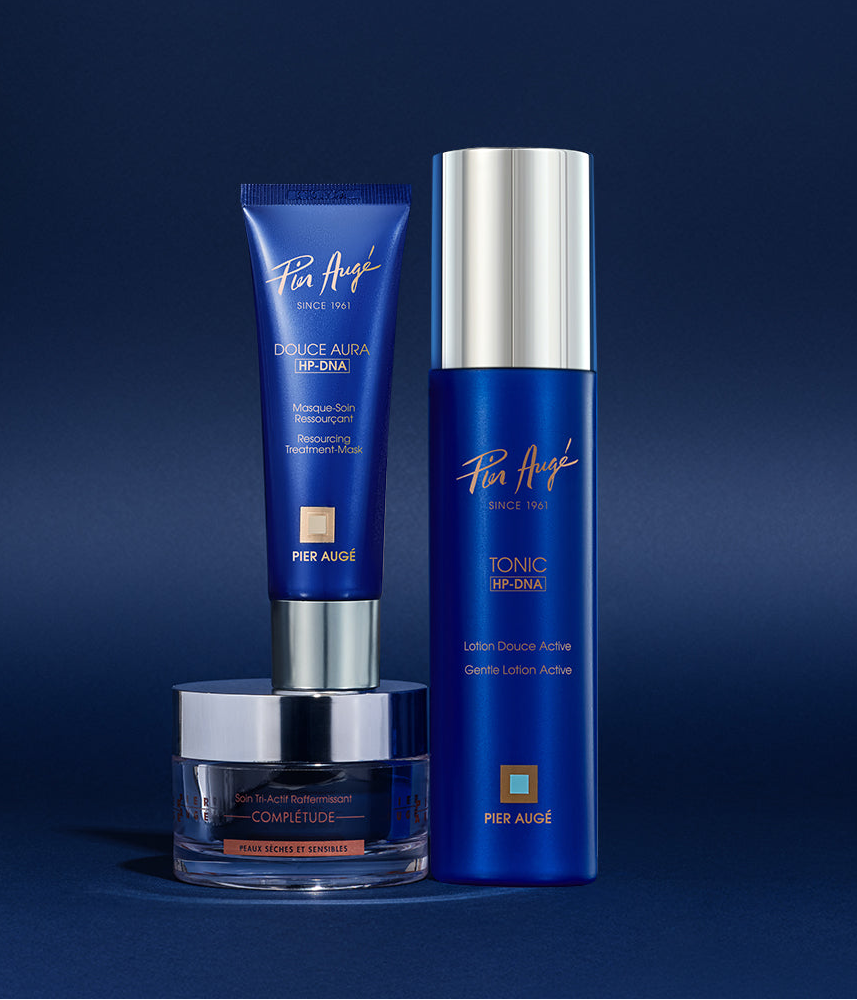
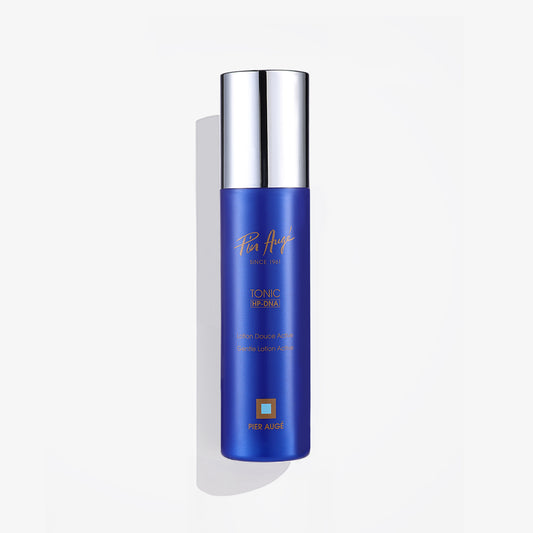
But here's something that surprised me researching this: PDRN isn't new. In 1979, Pier Augé, a French brand founded by two pharmacists in Monaco, began formulating high-purity PDRN (they called it HP-DNA) into skincare. That's over 40 years before K-beauty discovered it and made it trendy. The Korean brands deserve credit for popularizing PDRN globally, but the science foundation was laid in a French pharmacy lab decades earlier.
How PDRN Triggers Repair
PDRN binds to adenosine A2A receptors on your skin cells. From there it activates FAK, AKT, and MAPK signaling pathways. Here's what that cascade produces:
-
Fibroblasts multiply and migrate into damaged areas. Fibroblasts are what produce collagen and elastin
-
Filaggrin and fibronectin production increases, which means a stronger skin barrier
-
Ki-67 and Cyclin D1 levels go up. These are markers of healthy, active cell division
-
The inflammatory response gets modulated rather than amplified. Different mechanism from retinol
The short version: PDRN doesn't tell your skin what to do. It provides the nucleotides and signaling context your skin needs to do what it already knows how to do. This matters because it means you're not overriding natural processes. You're supporting them.
According to a review published in the Korean Medical Journal, PDRN therapy in a randomized trial achieved 37.3% complete wound closure versus 18.9% for placebo (p = 0.003). The median re-epithelialization rate was 82.2% vs 49.3%. Those are wound-healing numbers, not cosmetic ones, but the mechanism translates directly to skin aging.
PDRN vs Retinol for Wrinkles
If you're comparing retinol vs pdrn for wrinkles specifically, the answer changes depending on what kind of wrinkles you have and how patient you are.
Two Different Pathways to the Same Goal
Retinol takes the acceleration route. It speeds up epidermal turnover, physically smooths the surface, and signals fibroblasts to produce collagen. Results show up faster because you're literally shedding the damaged surface layers faster. The tradeoff is that collagen stimulation relies on continuous signaling. Stop the retinol, and that signal fades.
PDRN takes the repair route. It fixes DNA damage at the cellular level first. Then it optimizes the micro environment so fibroblasts can function properly on their own. The collagen and elastin production that follows is more autonomous. It takes longer to appear but isn't as dependent on keeping a daily application schedule.
A clinical study published in the Journal of Cosmetic Dermatology Science and Applications examined topical PDRN's effect on periocular aging. After treatment, crow's feet count improved by 12.06%, under-eye wrinkle count by 27.06%, and tear-trough wrinkles and periorbital roughness both showed significant improvement (p < 0.05 versus placebo). These are not earth-shattering percentages taken alone. But they were achieved without irritation, and the study used Raman spectroscopy to confirm that PDRN actually reached the dermis, which is the key hurdle for any topical.
Timeline Matters
|
Timeline
|
PDRN
|
Retinol
|
|
2-4 weeks
|
Hydration and texture improve noticeably
|
Redness, peeling, maybe purging
|
|
8 weeks
|
Roughly 47% reduction in wrinkle depth (clinical data)
|
Early smoothing becomes visible
|
|
12 weeks
|
Progressive improvement continues
|
60-70% improvement in fine lines
|
|
6+ months
|
Regeneration sustains on its own
|
Maintenance required; irritation if paused
|
The persistence gap is real and under-discussed. PDRN improves the cellular environment, so your skin continues benefiting even if you miss applications. Retinol's effects drift back toward baseline within 4-8 weeks of stopping because the accelerated turnover was being driven externally, not internally.
Different Wrinkles Need Different Tools
Expression lines around the eyes and mouth respond to both ingredients, but retinol's smoothing effect is faster and more dramatic in the short term. For deep static wrinkles that have been there for years, PDRN's structural approach wins over time. It's thickening the dermis, not just resurfacing the epidermis.
For photoaging specifically, PDRN has an important advantage. UV damage is DNA damage. Retinol can speed up the shedding of photoaged surface cells, but it can't repair the underlying DNA breaks the way PDRN's nucleotide delivery can. This is the mechanism that matters if sun damage is your primary concern.
PDRN Mask vs Retinol Mask: The K-Beauty Angle
Why Sheet Masks Work So Well for PDRN
The occlusive effect of a sheet mask, the way it seals the serum against your skin, works especially well for PDRN delivery. DNA fragments need prolonged contact time with the skin surface to absorb. A 15-20 minute sheet mask session provides exactly that. PDRN masks can be used daily. They hydrate immediately. They don't irritate.
Retinol Masks Are a Different Beast
Formulating retinol into a sheet mask is harder than it looks. The occlusive environment that helps PDRN absorb can turn retinol into an irritant bomb if the formula isn't carefully engineered. That's why retinol masks almost always use micro-encapsulation or slow-release technology. The MEDIHEAL Retinol Collagen Ampoule Lifting Mask is one of the better executions. It's a dual-sheet design that targets the jawline as well as the face.
Use frequency is the key difference. PDRN masks: daily if you want. Retinol masks: once or twice a week. Any more than that and you're asking for trouble.
Which Mask for Which Situation
You need immediate glow before an event? PDRN mask. You're trying to resurface deep texture over time? Retinol mask as a weekly treatment. Your skin is reactive and prone to redness? PDRN mask only. You just had a peel or microneedling? PDRN mask. Retinol masks have no place in post-procedure recovery.
How to Use Both: The Cycling Strategy
You don't have to pick one forever. Many people get better results from using both ingredients in a rotation.
Three Ways to Cycle
The simplest method: alternate nights. Retinol Monday, PDRN Tuesday, retinol Wednesday, and so on. Your skin gets a full recovery day between each retinol application. This is what most dermatologists recommend when patients want to combine the two.
The AM/PM split: PDRN serum in the morning, since it protects against UV damage and supports daytime repair. Retinol at night. This works because PDRN doesn't cause photosensitivity. You get the benefits of both without overlap.
Seasonal rotation: retinol in fall and winter when UV is lower and you're indoors more. Switch to PDRN in spring and summer when sun exposure increases and your skin needs protection more than exfoliation.
Recovering from Retinol Overuse
If you've been too aggressive with retinol and your skin is red, peeling, and angry, PDRN is a good option to reach for. Pier Augé's PA24 Soin Réparateur Apaisant uses high-concentration HP-DNA combined with calendula to calm the reaction and speed up barrier repair.
Their Douce Aura mask works for this too. Apply a thick layer, leave it on overnight, and the combination of shea butter, chamomile, and PDRN will have your skin feeling like skin again by morning.
Combinations to Avoid
Retinol plus AHAs or BHAs in the same routine is a recipe for over-exfoliation and a damaged barrier. PDRN plus strong acids can cause stability issues because PDRN degrades in very acidic environments. Safe pairings: PDRN with niacinamide, ceramides, hyaluronic acid, and peptides. All of those play nicely together.
Decision Framework: Which One Is for You
Pick Retinol If
Your skin is not particularly sensitive. You want fast, visible results and can handle a few rough weeks. Your main concerns are acne, blackheads, or uneven texture. You already wear sunscreen every day and you're willing to only apply retinol at night.
Pick PDRN If
Your skin is sensitive, reactive, or barrier-compromised. You've tried retinol and couldn't tolerate it. You have rosacea or eczema. You're pregnant or nursing. You want long-term structural improvement rather than quick surface smoothing. You care about the fact that Pier Augé has been working with this ingredient since 1979 and has four decades of formulation data behind it.
Pick Both If
Your skin is reasonably tolerant and you want to maximize anti-aging results. You're willing to manage two products on different schedules. You like the idea of one product that pushes and one that repairs.
Quick Match Chart
|
Skin Type
|
Go With
|
|
Oily / Acne-prone
|
Retinol first, PDRN on recovery days
|
|
Dry / Dehydrated
|
PDRN first, add retinol slowly if needed
|
|
Normal / Combination
|
Cycle both
|
|
Sensitive / Rosacea-prone
|
PDRN only
|
|
Mature / Deep wrinkles
|
Cycle both for collagen density
|
|
Pregnancy / Nursing
|
PDRN only. Retinol is not safe
|
The Verdict
The pdrn vs retinol question doesn't have a universal answer. It has a personal one.
Retinol produces faster, more dramatic visible changes. That's why it's been the standard for 50 years. But the side effects are real, and the consistency required makes it unsustainable for a lot of people. If you can tolerate it and you want maximum speed, retinol is still hard to beat.
PDRN produces slower, deeper, more durable changes. No irritation. No downtime. Can use it any time of day, any season. It's the better choice if your priority is skin health over quick cosmetic results, or if your skin simply won't cooperate with vitamin A.
The smartest approach for many people is cycling both. Retinol does the resurfacing. PDRN handles the recovery and builds the long-term structure. Each covers the other's weakness.
What's clear in 2026 is that the market has finally moved past the idea that anti-aging has to hurt. PDRN proved that regeneration without irritation is possible. For the millions of people who couldn't use retinol, that changes everything.
FAQ
Is PDRN better than retinol for wrinkles?
They work differently. Retinol gives you faster visible smoothing by forcing cell turnover. PDRN gives you slower, more lasting improvement by regenerating tissue. For deep wrinkles, cycling both gets you the best of each. For someone who can't tolerate retinol at all, PDRN is the better option because it's the one you'll actually use consistently.
Is PDRN safe during pregnancy?
Yes. Topical PDRN has no known contraindications for pregnancy or breastfeeding. Retinol must be avoided during pregnancy. This alone makes PDRN a practical anti-aging choice for anyone planning to become pregnant or currently nursing.
How long until I see results from PDRN?
Hydration and texture improvements show up in 2-4 weeks. Wrinkle depth reduction becomes measurable around week 8. One clinical study showed roughly 47% reduction in wrinkle depth at that point. Results continue to build over months.
Which costs less?
Retinol is cheaper upfront. Drugstore serums start at $10-15. Quality PDRN products range from $30 to $130+. But the cost-per-effective-use math changes when you account for the fact that many people waste retinol products after quitting during the purge. PDRN's high tolerability means fewer abandoned products.
Can PDRN fix retinol burn?
Yes. The adenosine A2A receptor activation directly accelerates barrier repair and calms inflammation. Pier Augé's Douce Aura Resourcing Treatment Mask and PA24 Soin Réparateur Apaisant are both suitable for this purpose. Apply generously and leave on overnight.